

Showing 1 - 20 of 22 results
Accelerator Systems Overview

The Victor Chang Institute School Science Awards
Publications
Publications and resources from the Powder Diffraction beamline.
Beamtime Guide - XFM
Beamtime Guide on the X-ray Fluorescence Microscopy beamline at the Australian Synchrotron.

Archive
Archive of ANSTO research publications, seminars and short talks.

Highlights - Cultural Heritage
Over the last decades, neutron, photon, and ion beams have been established as an innovative and attractive investigative approach to characterise cultural-heritage materials.

Highlights - Aerosol Sampling
ANSTO has been tracking and publishing data on fine particle pollution from key sites around Australia, and internationally, for more than 20 years.

Food and health
Consumers want to know that the foods they consume provide health benefits. Food materials science can monitor changes during digestion as well as assist in the development of low-fat products.
Deuteration Publications
Publications by ANSTO's National Deuteration Facility.

Lead, Food Materials Science; Instrument Scientist, QUOKKA (Small-Angle Neutron Scattering); Honorary Professor, CNFS, The University of Queensland
Role at ANSTO

Highlights - Energy Materials
Highlights of the Energy Materials Project.
Call for Proposals
Proposals at the Australian Centre for Neutron Scattering and National Deuteration Facility.

Food processing and development
Research can improve both food processing and food product development.

About the ANSTO Hackathon
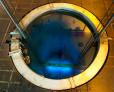
Gamma irradiation
ANSTO operates a range of cobalt-60 gamma irradiators, providing the Australian community with a range of irradiation services for medical, health, industry, agriculture and research purposes.

Nanoprobe beamline (NANO) - under construction
The BRIGHT Nanoprobe beamline provides a unique facility capable of spectroscopic and full-field imaging. NANO will undertake high-resolution elemental mapping and ptychographic coherent diffraction imaging. Elemental mapping and XANES studies (after DCM upgrade) will be possible at sub-100 nm resolution, with structural features able to be studied down to 15 nm using ptychography.

Highlights - Magnetism
Highlights of the Magnetism Project.

Access to information

Advanced Diffraction & Scattering Beamlines (ADS-1 and ADS-2) UNDER CONSTRUCTION
The Advanced Diffraction and Scattering beamlines (ADS-1 and ADS-2) are two independently operating, experimentally flexible beamlines that will use high-energy X-ray diffraction and imaging to characterise the structures of new materials and minerals.