



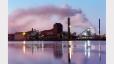
Fine particle pollution peaks during bushfires
Recent catastrophic Australian bushfires produced extremely high levels of fine particle pollution.
Showing 21 - 40 of 520 results
Recent catastrophic Australian bushfires produced extremely high levels of fine particle pollution.
Doping with transition metals produced stability in bismuth oxide.
ANSTO has been measuring and characterising fine particle pollution from key sites around Australia for more than 30 years.
This data set provides records from 1998 to 2019 of the concentration of 12 elements present in fine airborne particulate matter from an air sampling station located in Mayfield in Newcastle, NSW.

Early-to-mid career women professionals from Asia Pacific region participate
Research demonstrates the existence of hexagonal planar geometry in a transition metal complex with great potential application across multiple disciplines.
The Australian Academy of Technology and Engineering (ATSE) has elected Professor Andrew Peele, Director of ANSTO’s Australian Synchrotron, to become a Fellow of the prestigious organisation.
Dr Emily Finch, Microscopy Group Manager at the Australian Synchrotron, has been selected among fourteen up-and-coming leaders of Australian science to participate in Australian Academy of Technological Sciences and Engineering (ATSE) Emerging Leaders Network 2026 which supports high-potential rising professionals in STEM.
Today Dr Jenine McCutcheon from the University of Queensland’s School of Earth and Environmental Sciences has been recognised for her outstanding research with the Australian Synchrotron's Stephen Wilkins Medal.
Blue Carbon Horizons Team showed coastal wetlands capture more carbon as sea levels rise
ANSTO has supported a new study published in Quaternary Science Reviews that dates the dramatic collapse of one of the largest glaciers ever documented in the Himalayas. The findings overturn a long-held assumption about what sustains wet-climate glaciers.
Applications are currently open for the 2024 Scholarship AINSE ANSTO French Embassies (SAAFE) Research Internship Program. The SAAFE Program supports early career researchers at PhD and Postdoctoral level to expand research and innovation activities within Human Health, the Environment and the Nuclear Fuel Cycle, to initiate sustainable research networks and linkages to support Australia, New Zealand and France research and innovation.
Energy researchers from UNSW have reported progress using controlled architectural design and structural engineering as a method to fine-tune materials to have simultaneous high power and high energy density for the electrochemical storage in portable devices.