Principal Research Scientist, Project Leader


Showing 21 - 40 of 130 results

Role at ANSTO
Carl is a chemist working in radiopharmaceutical development.
Dr Rezwanul Haque, now a senior lecturer at the University of the Sunshine Coast, received a national Young Scientist Award for his earlier research using nuclear techniques at ANSTO’s Australian Centre for Neutron Scattering to find cracks and signs of stress in riveted joints in sheet metal in car bodies.
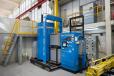
Hot Isostatic Pressing supports advanced manufacturing by increasing a material's density and reducing porosity. This capability complements ANSTO’s extensive suite of instruments and techniques for characterising materials and final products.

Dr Karina Meredith was appointed Director of the new Research and Technology Group for Environment effective 15 January 2024.
Today The Australian ran a story entitled “Fears for indigenous lands as foreign nuclear waste headed our way”, 18 September 2018. ANSTO was not contacted in relation to the article, but can provide the following information in response which can be attributed to a spokesperson.
Researchers and industry partners from UNSW Australia, the Australian Centre for Nanomedicine, Children’s Cancer Institute and Inventia Life Sciences Pty Ltd have been awarded the 2021 ANSTO Eureka Prize for Innovative Use of Technology for their method to rapidly-produce 3D cell structures

Role at ANSTO


Read about an ANSTO scientist and their work to prepare for a school project or interview.

Thirty years of ANSTO's unique capability in monitoring fine particle pollution provides insight on bushfire smoke.
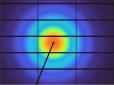
The Biological Small Angle X-ray Scattering beamline will be optimised for measuring small angle scattering of surfactants, nanoparticles, polymers, lipids, proteins and other biological macromolecules in solution. BioSAXS combines combine a state-of-the-art high-flux small angle scattering beamline with specialised in-line protein purification and preparation techniques for high-throughput protein analysis.


Role at ANSTO