

Showing 21 - 35 of 35 results
Bringing radiochemistry to life

Samples - Infrared microspectroscopy
The Infrared microspectroscopy microscopes can record spectra from a range of different samples; from thin microtomed sections to polished blocks and embedded particles. This section highlights the types of samples that can be analysed using the IRM beamline

Highlights - Magnetism
Highlights of the Magnetism Project.

Melbourne Access Proposals
ANSTO’s user office in Melbourne offers access to the Australian Synchrotron, a world-class research facility with over 4,000 user visits per year. ANSTO seeks collaboration and partnerships with research organisations, scientific users and commercial users.
Big Ideas
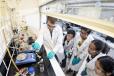
ANSTO Big Ideas encourages students to creatively communicate the work of an Australian scientist, and explain how their work has inspired them to come up with a Big Idea to make our world a better place. This competition is intended to engage and support Australian students in years 7-10 in Science and encourage them to pursue studies and careers in STEM.

Highlights - Energy Materials
Highlights of the Energy Materials Project.
Archive
See details of previously published customer updates from our Health products team.

Board Member
Professor Lee is a Nuclear Medicine Physician at Austin Health in Melbourne, with extensive nuclear medicine expertise and is very highly regarded in the nuclear medicine community.

Advanced Diffraction & Scattering Beamlines (ADS-1 and ADS-2) UNDER CONSTRUCTION
The Advanced Diffraction and Scattering beamlines (ADS-1 and ADS-2) are two independently operating, experimentally flexible beamlines that will use high-energy X-ray diffraction and imaging to characterise the structures of new materials and minerals.

Head of Radiochemistry
Role at ANSTO
Deuteration Publications
Publications by ANSTO's National Deuteration Facility.

Delivery schedule
Latest information on the scheduled supply of our nuclear medicine production.
High Performance Macromolecular Crystallography Beamline (MX3)
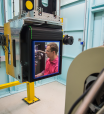
The High Performance Macromolecular Crystallography beamline will enable the study of very small (sub-5 micrometre) or weakly diffracting crystals, providing a state-of-the-art high-throughput facility for researchers. MX3 will be able to study the structures of large proteins and protein complexes for virology, drug design and industrial applications via goniometer mounted crystals, in-tray screening, or via serial crystallography methods.