Funding supports biomedical research
ANSTO part of consortium funded by Federal Government to develop new radioimmunological drugs.


Showing 21 - 40 of 44 results
ANSTO part of consortium funded by Federal Government to develop new radioimmunological drugs.
It's ANSTO's role to keep Australia across the very latest developments in nuclear science and technology from around the world. Part of this responsibility is keeping us abreast of the latest developments in nuclear power technologies.
Join us for this online webinar to explore and discuss the huge opportunities in growing a dynamic and impactful future nuclear workforce.
Scientists at ANSTO together with Lithium Australia Limited (LIT) have developed a world-first technology to extract more lithium from lithium mining waste, in a game-changer for Australian lithium industry.
International collaboration uses Australian Synchrotron on pioneering malaria research.
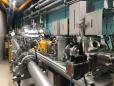
The Medium Energy- X-ray Absorption Spectroscopy beamlines provides access to XANES and EXAFS data from a bending magnet source, optimised for cutting-edge applications in biological, agricultural and environmental science in an energy range that is not currently available at the Australia Synchrotron.
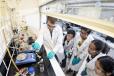
Winners of the Big Ideas Competition 2021
Phase contrast tomography shows great promise in early stages of study and is expected to be tested on first patients by 2020.


Theinstrument is typically used to study diffusing water molecules or yet larger molecules like polymers or biological molecules. In addition, Emu can reveal quantum-mechanical tunnelling.
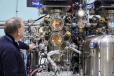
Technical information on the Soft X-ray spectroscopy beamline at the Australian Synchrotron.
Researchers based at Monash University and the Swedish Museum of Natural History have pioneered the use of nuclear imaging techniques at ANSTO’s Centre for Neutron Scattering to resolve long-standing problems in plant evolutionary history linked to wildfires.

Highlights of the Magnetism Project.

Archive of ANSTO research publications, seminars and short talks.
In an effort to understand why the Tongan Hunga volcano eruption was so explosive, internationally-recognised volcanologist Prof. Shane Cronin of the University of Auckland and associates rely on beamlines at the Australian Synchrotron to support comprehensive research on the Hunga event.