Fusion research in Australia
Australia part of global renaissance in fusion power research symbolised by ITER experiment


Showing 21 - 38 of 38 results
Australia part of global renaissance in fusion power research symbolised by ITER experiment
Researchers use Kitaev theoretical model to explain unusual phenomenon in two-dimensional material.
On average, there is now 17 per cent less rainfall across Western Australia’s south-western region than was recorded prior to 1970. This rainfall reduction has economic, social and environmental implications for the region, in particular for the growing capital of Perth, as well as water-dependent industries in the state.

Research can improve both food processing and food product development.
Blake Orr from ARPANSA review the Netflix series Radioactive Emergency.

The Panel Pledge aims to increase the visibility and contribution of women and diverse leaders in public and professional forums.

Explore ANSTO's range of publications and reports available for the public.
The cost of building radiation-hardness testing into the design and qualification of electronics is typically well under one per cent of a major project’s budget.

Your students can analyse real research data from ANSTO scientists.

ANSTO has been tracking and publishing data on fine particle pollution from key sites around Australia, and internationally, for more than 20 years.
Pioneering work on materials for energy production, such as lithium ion batteries, has made ANSTO a centre of specialist capabilities and expertise.

ANSTO User Meeting 2021 - Speakers
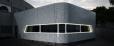
The Advanced Diffraction and Scattering beamlines (ADS-1 and ADS-2) are two independently operating, experimentally flexible beamlines that will use high-energy X-ray diffraction and imaging to characterise the structures of new materials and minerals.
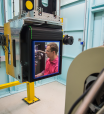
The High Performance Macromolecular Crystallography beamline will enable the study of very small (sub-5 micrometre) or weakly diffracting crystals, providing a state-of-the-art high-throughput facility for researchers. MX3 will be able to study the structures of large proteins and protein complexes for virology, drug design and industrial applications via goniometer mounted crystals, in-tray screening, or via serial crystallography methods.
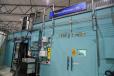
Publications and resources from the Powder Diffraction beamline.

Archive of ANSTO research publications, seminars and short talks.