
Highlights - Energy Materials
Highlights of the Energy Materials Project.


Showing 21 - 40 of 44 results
Highlights of the Energy Materials Project.
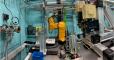
With enhanced submicron spatial resolution, speed and contrast, the Micro-Computed Tomography beamline opens a window on the micron-scale 3D structure of a wide range of samples relevant to many areas of science including life sciences, materials engineering, anthropology, palaeontology and geology. MCT will be able to undertake high-speed and high-throughput studies, as well as provide a range of phase-contrast imaging modalities.

Professor Senden is an accomplished physical chemist and currently is the Pro Vice-Chancellor (Research Infrastructure and Entities) at the Australian National University.



Three-year full-time PhD program is in partnership between the nandin Innovation Centre (ANSTO) and Design Factory Melbourne (Swinburne University). The PhD is based at ANSTO, Lucas Heights, Sydney, NSW.
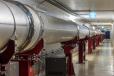
The Imaging and Medical beamline (IMBL) is a flagship beamline of the Australian Synchrotron built with considerable support from the NHMRC. It is one of only a few of its type, and delivers the world’s widest synchrotron x-ray ‘beam’.

Research can improve both food processing and food product development.
Publications by ANSTO's National Deuteration Facility.

The BRIGHT Nanoprobe beamline provides a unique facility capable of spectroscopic and full-field imaging. NANO will undertake high-resolution elemental mapping and ptychographic coherent diffraction imaging. Elemental mapping and XANES studies (after DCM upgrade) will be possible at sub-100 nm resolution, with structural features able to be studied down to 15 nm using ptychography.

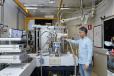
The THz/Far-IR Beamline couples the high brightness and collimation of a bend-magnet synchrotron radiation to a Bruker IFS125HR spectrometer providing high-resolution spectra (0.00096 cm-1) with signal to noise ratio superior to that of thermal sources up to 1350 cm-1 for gas-phase applications; the beamline also delivers signal to noise ratio superior to that of thermal sources up to 350 cm-1 for condensed phase samples.

Explore ANSTO's range of publications and reports available for the public.
Study helps make carbon dating a more accurate chronological tool.


Radioisotopes are widely used in medicine, industry, and scientific research. New applications for radioisotopes are constantly being developed.

(ANSTO) has welcomed the launch of the new National Science Statement and revitalised National Science and Research Priorities by Minister for Industry and Science, The Hon Ed Husic MP and Australia’s Chief Scientist, Dr Cathy Foley AO PSM.

ANSTO's OPAL reactor is one of the world's most advanced and reliable research reactors today. To ensure we can continue operating OPAL safely and reliably and maximise utilisation, ANSTO must regularly carry out maintenance and upgrades.