Highlights - Aerosol Sampling
ANSTO has been tracking and publishing data on fine particle pollution from key sites around Australia, and internationally, for more than 20 years.


Showing 21 - 40 of 104 results
ANSTO has been tracking and publishing data on fine particle pollution from key sites around Australia, and internationally, for more than 20 years.
Read about an ANSTO scientist and their work to prepare for a school project or interview.

Career Statement and Role at ANSTO
ANSTO Big Ideas encourages students to creatively communicate the work of an Australian scientist, and explain how their work has inspired them to come up with a Big Idea to make our world a better place. This competition is intended to engage and support Australian students in years 7-10 in Science and encourage them to pursue studies and careers in STEM.

The Think Science! competition encourages students in Years 3-10 to learn science inquiry skills in a fun and accessible way! Entry is FREE and there are generous prizes for winning schools. Any topic can be chosen, and special materials are not required.
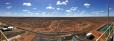
The Minerals consultancy group at ANSTO has expertise in chemical engineering, metallurgy, mineralogy, chemistry, geology, and radiation safety. We can support our client's project by providing process development services, technical review, and research.



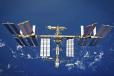
In space, without the protection of the magnetosphere, the type and dose of radiation is considerably different to what is naturally experienced on earth. However, it is the secondary particles of lower energies created when galactic and cosmic radiation interacts with shielding that is of concern for astronauts.
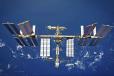
In collaboration with the French National Institute of Health and Medical Research (INSERM) and the French International Space Agency (CNES), ANSTO scientists are undertaking research on the radiobiological effects of secondary particles that are created when radiation interacts with the shielding on the International Space Station.

Over the last decades, neutron, photon, and ion beams have been established as an innovative and attractive investigative approach to characterise cultural-heritage materials.
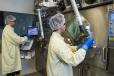
See details of previously published customer updates from our Health products team.

A radiation sensor designed and built by Western Australian high school students has been tested on an ANSTO ion beam, ahead of its trip to the International Space Station later this year. The Binary Space Program is a research group at Curtin University that, in 2021, designed, built and flew Western Australia's very first homegrown satellite, Binar.
ANSTO proudly contributes to measures that recognise all aspects of Aboriginal and Torres Strait Islander culture and heritage during NAIDOC Week and all year.

Detailed data on ANSTO electricity use and CO2 emissions for FY2024 - FY2025