

Showing 21 - 40 of 81 results
Artefact reveals resilience of Aboriginal cultural knowledge
New imaging approach using live plants will benefit agriculture and environment
A cross-disciplinary team has used laboratory-based and synchrotron-based infrared spectroscopy imaging techniques to monitor the waxy surface of living plant leaves in real-time to gain insights into plant physiology in response to disease, biological changes or environmental stress.

Waste Production and Consumables
ANSTO provides a summary of waste production and consumables for FY2024 - FY2025

About the ANSTO Hackathon
Celebrating Australian women in nuclear
Highlighting the contribution of four inspirational ANSTO leaders on International Women's Day.

Update: Regional Cooperative Agreement (RCA) Cooperative Projects (Asia and Pacific)
ANSTO is coordinating and facilitating the calling of pre-concept papers for the next cycle of technical cooperative project proposals under the Regional Cooperative Agreement for Research, Development and Training Related to Nuclear Science and Technology for Asia and the Pacific (RCA) | IAEA

Feather Map of Australia
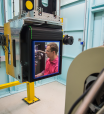
High Performance Macromolecular Crystallography Beamline (MX3)
The High Performance Macromolecular Crystallography beamline will enable the study of very small (sub-5 micrometre) or weakly diffracting crystals, providing a state-of-the-art high-throughput facility for researchers. MX3 will be able to study the structures of large proteins and protein complexes for virology, drug design and industrial applications via goniometer mounted crystals, in-tray screening, or via serial crystallography methods.
Surprise cell death discovery provides birth defect clues
Understanding of the role that programmed cell death has in development.
Feathery moa’s fossilised footprints, ancient age revealed
ANSTO scientist, Dr Klaus Wilcken of the Centre for Accelerator Science, used cosmogenic nuclide dating to determine the ages of layered sand and gravel samples, in which seven footprints of the flightless bird, the moa, were found on the South Island in New Zealand in 2019.

Privacy Policy
Australian Nuclear Science and Technology Organisation (ANSTO) is committed to protecting your personal information in accordance with the Privacy Act 1988 (Cth) (Privacy Act) and the Australian Privacy Principles.
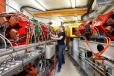
Particle Accelerators
The Accelerator Science group purse a broad research program with the aims of improving the performance and reliability of our accelerators, increasing their research capabilities and developing the next generation of accelerator technology.

Diversity, Equity, Inclusion and Belonging
At ANSTO we understand that diverse teams produce better outcomes – and we value the merit that a diverse perspective can bring to the quality and outcomes of our work, and the way we get the job done.

STEAM Club Online
Learn. Create. Innovate
International science team paves way for fast and accurate flu diagnosis
ANSTO welcomes revitalised National Science and Research Priorities and National Science Statement
(ANSTO) has welcomed the launch of the new National Science Statement and revitalised National Science and Research Priorities by Minister for Industry and Science, The Hon Ed Husic MP and Australia’s Chief Scientist, Dr Cathy Foley AO PSM.

About us
The Detection & Imaging group builds on ANSTO’s 70-year history of scientific achievements and contributions in meeting the nuclear needs of industry, globally.
Crucial expertise in groundwater benefits Australia
Using nuclear techniques to help sustain Australia's finite groundwater resources
Surfing at the atomic scale: ANSTO scientists confirm experimentally new fundamental law for liquids
The first experimental evidence to validate a newly published universal law that provides insights into the complex energy states for liquids has been found using an advanced nuclear technique at ANSTO.