Establishing global connections on quality seafood production and authenticty
ANSTO shares expertise on food authenticity research using nuclear techniques with Southeast Asia stakeholders.


Showing 201 - 220 of 600 results
ANSTO shares expertise on food authenticity research using nuclear techniques with Southeast Asia stakeholders.
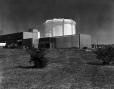
In April 15, 1953, Australia entered the nuclear science arena, when the Atomic Energy Act came into effect. The Australian Atomic Energy Commission (AAEC) followed and in 1987 the AAEC evolved into the Australian Nuclear Science and Technology Organisation (ANSTO) as it’s known today.
Innovative medical device Rhenium-SCT® therapy for non-melanoma skin cancer is now available in Australia
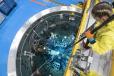
Irradiation is the process by which an object is exposed to radiation. Irradiation can be useful for many industry applications.
Aussie development offering significant benefits to the energy industry.

Biosciences staff support research for radiopharmaceutical translation, radiation biology and radiotracer studies. New radiotracers can be fully characterised and assessed by a range of evaluation techniques, including in vitro and in vivo studies.
ANSTO provides a range of learning resources for students interested in science or studying for a school project. ANSTO also provides educational school holiday workshops and in-school-term science tours.
ANSTO has been licensed as the Australian manufacturing partner of an innovative, non-invasive treatment for non-melanoma skin cancer (NMSC).

Three-year full-time PhD program is in partnership between the nandin Innovation Centre (ANSTO) and Design Factory Melbourne (Swinburne University). The PhD is based at ANSTO, Lucas Heights, Sydney, NSW.
Materials researcher with a passion for chemistry, Matthew Teusner is investigating lithium sulfur materials to support the next step in cleaner battery power.
ANSTO continues a longstanding, mutually-beneficial research relationship with the University of Wollongong following the signing of a strategic agreement this week.
Nuclear engineer, Robert Mardus-Hall, with his research partner Andrew Pastrello, are developing nuclear power based solutions for space missions to the Moon and Mars.
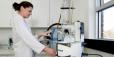
Our research group carries out fundamental research uniquely applied to industrial problems in the areas of uranium, rare earth and lithium processing.
ANSTO Head of Research Dr Suzanne Hollins has been appointed to chair IAEA group on nuclear applications.
Radiation testing of electronic components at ANTO could benefit the aviation industry, regulators and most importantly, passengers as solar radiation events increase.

ANSTO’s suite of infrastructure and capabilities is ideally suited for solving problems relating to the development and characterisation of advanced materials, and the engineering of manufactured components and processes.