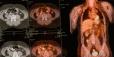
Cyclotrons and PET scans fact sheet
This fact sheet gives an overview of:
- Positron Emission Tomography (PET) scans
- Fluorine-18 and its decay
- Production of F-18 using a cyclotron


Showing 221 - 240 of 2601 results
This fact sheet gives an overview of:
- Positron Emission Tomography (PET) scans
- Fluorine-18 and its decay
- Production of F-18 using a cyclotron
$80.2 million in new funding to expand the research capabilities of the Australian Synchrotron.
ANSTO scientist, Dr Klaus Wilcken of the Centre for Accelerator Science, used cosmogenic nuclide dating to determine the ages of layered sand and gravel samples, in which seven footprints of the flightless bird, the moa, were found on the South Island in New Zealand in 2019.
Chinese researchers have eveloped a novel strategy for the scalable production of high-performance, thin, and free-standing lithium anodes for lithium-ion batteries with enhanced cycling stability and electrochemical properties.
Quantum theory explains the strange and unpredictable behaviour of subatomic particles and the smallest amounts of energy.

Today is World Environment Day, a United Nations initiative for encouraging worldwide awareness and action for the environment. This year’s theme is “Beat Air Pollution”, a call to action to combat this global crisis.
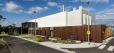
Frequently asked questions on the Mo-99 Manufacturing Facility and the ANSTO Nuclear Medicine project.
The first National Graduate Innovation Forum will be held in November to connect PhD students with representatives from four of Australia’s leading industries to apply scientific thinking to current real-world challenges.

Think Science! 2023 Summary and Results

The Macromolecular Crystallography beamlines at the Australian Synchrotron (MX1 and MX2) are general purpose crystallography instruments for determining chemical and biological structures.

ANSTO is coordinating and facilitating the calling of pre-concept papers for the next cycle of technical cooperative project proposals under the Regional Cooperative Agreement for Research, Development and Training Related to Nuclear Science and Technology for Asia and the Pacific (RCA) | IAEA