

Showing 221 - 240 of 298 results
5th annual ANSTO awards in nuclear science and technology
Application approved for operation of interim waste store
PET innovation
Tool developed for producing F-18 radiopharmaceuticals for PET imaging.
ANSTO contributes to state-wide survey of groundwater resources in NSW
ANSTO groundwater experts have collaborated with the NSW Department of Planning, Industry and Environment on a comprehensive survey of groundwater resources in the state.

Infrastructure - Cultural Heritage
In Australia and the Southeast Asia basin, the ANSTO facility offers a wide range of unique nuclear-beam techniques for cultural heritage research.
A look inside an instrument that sees the nanoverse: Meet Emu

The Victor Chang Institute School Science Awards
Indigenous knowledge linked to pollution data
Atmosphere scientists find link between indigenous weather knowledge and Sydney air pollution.
ANSTO hosted workshop brings scientists together from Asia and the Pacific to address food fraud using nuclear science and technology
Two Aussie start-ups team up with ANSTO
The nandin Deep Technology Incubator at ANSTO’s Lucas Heights innovation precinct has welcomed two new members.
Big boost in jobs and funding for Innovation Precinct
Jobs supported through the nandin Innovation Centre at ANSTO have skyrocketed 360 per cent since opening, with member businesses raising more than $3.9 million in capital, in a major boost for the local Sutherland Shire economy.
ANSTO joins global network supporting innovation
ANSTO is expanding its global connections, with the nandin Innovation Centre joining an international network created to increase cross industry collaboration and co-creation.
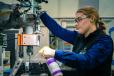
Apprenticeship Program
Ready to start a hands-on career? ANSTO’s Apprenticeship Program gives you the chance to earn while you learn, build real trade skills and contribute to work that supports Australia’s leading nuclear science and technology organisation.
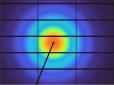
Biological small angle X-ray scattering beamline (BioSAXS)
The Biological Small Angle X-ray Scattering beamline will be optimised for measuring small angle scattering of surfactants, nanoparticles, polymers, lipids, proteins and other biological macromolecules in solution. BioSAXS combines combine a state-of-the-art high-flux small angle scattering beamline with specialised in-line protein purification and preparation techniques for high-throughput protein analysis.

How to Access MX3
The women of nuclear stewardship science are experts in the safe use of radioactivity
It's all about the interface with multi-use polymer brushes
The University of Newcastle and UNSW [GW1] are using advanced neutron scattering techniques at ANSTO to carry out research on the structure of polymers in complex salt environments that will ultimately provide a way to predict their behaviour for real-world applications.
Nanoindentation + modelling = innovation for industry
Modelling and experimentation - a powerful combination in probing mechanical properties of ion irradiated materials through nanoindentation.
Microscale clues provide insight into cataclysmic Tongan volcanic eruption
In an effort to understand why the Tongan Hunga volcano eruption was so explosive, internationally-recognised volcanologist Prof. Shane Cronin of the University of Auckland and associates rely on beamlines at the Australian Synchrotron to support comprehensive research on the Hunga event.