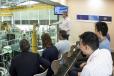
Tours can be booked for groups from Monday to Friday, subject to availability. Groups must be at least 12 people. We can cater to a maximum of 32 people, as this is the number we can accommodate in our on-site buses.
When you request a tour, please give us as much information about the age range and learning levels of your participants so we can best accommodate your group. This tour is not intended for children younger than 8 years old.
Duration: 2.5 hours
Cost: $15 each for all tour attendees (parents and children)
Let your students lead a 30-minute Q&A session with our ANSTO experts about one of the following three topics:
- Nuclear medicines
- Nuclear techniques to study the environment
- Fission and its applications in reactors
Please ensure your students do some pre-reading about the research topic and come prepared with questions to ask during the session. We also ask that teachers send us a copy of the student questions the day before, so we can adequately prepare for your session. Teachers must be present during the session with their students.
Cost: Free
Specifications, Instrument reference, User manual.
Specifications, Instrument layout, and Instrument reference
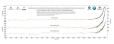
This poster shows greenhouse emissions measured in Antarctic ice cores and the Cape Grim monitoring station until 2017.
Technical Information on the X-ray fluorescence microscopy at the Australian Synchrotron.
A limited amount of travel support is available to students from AINSE member institutes to travel to the New User Sympsosium.
ANSTO and ASTA are partnering with CERN to offer two Australian science teachers the chance to participate in an all-expenses-paid* two-week summer school at the Large Hadron Collider.
Sample environments, Data Analysis.
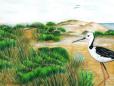
An initiative for National Science Week 2024, the Shorebirds Competition addressed the 2024 National Science Week theme of "Species Survival" and provided unique cross-curricula learning for Australian primary school students in Years 3-6.
Specifications, Instrument reference, User Manual, Getting started guide.
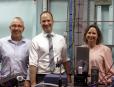
Don't hesitate to contact any one of the team with your enquiry.
In this workbook, students will:
- model a nuclear chain reaction
- apply this model to explain how a nuclear chain reaction occurs
- explain the advantages and limitations of the model
- visualise what is meant by nuclear fission
- use critical thinking skills to improve the model
Garry McIntyre joins editorial board of Journal of Applied Crystallography.
Specifications and Instrument reference.
Pagination