Celebrating Australian women in nuclear
Highlighting the contribution of four inspirational ANSTO leaders on International Women's Day.


Showing 281 - 300 of 609 results
Highlighting the contribution of four inspirational ANSTO leaders on International Women's Day.
The Australian Government’s nuclear agency, ANSTO, together with NSW Police and multiple state and federal authorities, has completed an operation to repatriate radioactive waste from the UK.
Four annual awards in neutron scattering were announced at Australian Neutron Beam Users Group (ANBUG) and AINSE Neutron Scattering Symposium (AANSS) to individuals with strong links to ANSTO
Instrument scientist and expert in low dimensional magnetism Dr Kirrily Rule joins FLEET ARC Centre.
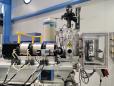
The high-energy heavy-ion microprobe is used for the characterisation or modification of material properties at depths from approximately 1 micrometre to maximum depths of up to 500 micrometres from the material surface.
The nuclear medicine community has welcomed the Australian Government’s decision to provide $30 million in funding to ANSTO for the design of a new nuclear medicine manufacturing facility.
The University of Newcastle and UNSW [GW1] are using advanced neutron scattering techniques at ANSTO to carry out research on the structure of polymers in complex salt environments that will ultimately provide a way to predict their behaviour for real-world applications.
Research confirms that fraudulent Kakadu plum extracts are in circulation online and in the international marketplace.
ANSTO has contributed to a large international study which decodes a fundamental process in Earth’s history and provides guidelines regarding the types of research questions that palaeontologists can investigate using marine fossils.
ANSTO has supported research led by a University of Sydney team who gained insights into how oil molecules retain their ‘liquid-like’ properties when they are chemically attached as an extremely thin layer to solid surfaces.
Two early career nuclear scientists who received international scholarships have spent time in the Nuclear Fuel Cycle group at ANSTO are making progress on their work to improve nuclear fuel.
Collaboration finds that old carbon reservoirs are unlikely to cause a massive greenhouse gas release in a warming world.
A team of scientists from The Australian National University (ANU) has discovered how a powerful “weapon” used by many fungal pathogens enables them to cause disease in major food crops such as rice and corn

Accurate low level tritiated water (HTO) data is an essential tool for groundwater dating and understanding groundwater recharge processes.
ANSTO will make an application to the independent nuclear regulator, ARPANSA, to vary its license for its Interim Waste Store. The original operating license was approved in 2015, enabling the facility to hold what is called a TN-81 cask of intermediate-level radioactive waste that was safely repatriated from France in 2015.
Scientists at ANSTO together with Lithium Australia Limited (LIT) have developed a world-first technology to extract more lithium from lithium mining waste, in a game-changer for Australian lithium industry.
Early research at ANSTO has contributed to development of innovative submicron particle encapsulation technology.