Aussie scientists to develop $500 million-dollar project in Mexico
Two Australian scientists have been appointed to assist with the development of a $500 million-dollar synchrotron facility in Mexico, the first and largest project of its kind.


Showing 281 - 300 of 543 results
Two Australian scientists have been appointed to assist with the development of a $500 million-dollar synchrotron facility in Mexico, the first and largest project of its kind.
MABI instrument can determine both the concentration and source of black carbon pollution in the atmosphere.
ANSTO commenced an aerosol sampling program thirty years ago this week to characterise these pollutants and ultimately, identify their sources, which has taken it to the forefront of environmental monitoring of this type in Australia and the region.
Access to a ‘window into the cell’ with University of Wollongong cryogenic electron microscope at ANSTO.
Research highlights how biodistribution of a toxic substance essential to understand all exposure risks.

ANSTO is a highly regulated organisation. Our governance system and processes provide critical guidance to effectively manage ANSTO’s activities. This section outlines the processes and systems that are in place to provide assurance to Government, our stakeholders and the community that we are working within our regulated and mandated requirements.
Jobs supported through the nandin Innovation Centre at ANSTO have skyrocketed 360 per cent since opening, with member businesses raising more than $3.9 million in capital, in a major boost for the local Sutherland Shire economy.
Australia is leading an agriculture project in the Asia and Pacific region, in partnership with the International Atomic Energy Agency (IAEA) and the Regional Cooperative Agreement for Research, Development and Training Related to Nuclear Science and Technology for Asia and the Pacific (RCA) to progress Atoms4Food.
A collaborative group including Monash has produced an ultra-thin and ultra-flexible organic solar cell for advanced wearable devices.
Since 1962, the United Uranium Scholarship has helped promising young scientists in the field of nuclear energy extend their knowledge and expertise. In 2022, scholarships were awarded to several ANSTO researchers, including Phil Sutton.
Three new federal grants were announced to support manufacturing and nuclear technologies.
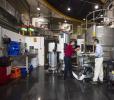
ANSTO offers a diverse range of career opportunities within science, engineering, corporate services and trade disciplines.
Nuclear science is crucial to understanding our universe, our world and ourselves at the atomic level. If we can understand how atoms get together, interact, or can be best combined with other atoms, new, more efficient materials and drugs can be developed.
A new study has found that forest expansion and thickening after British colonisation has created landscapes more prone to burning, amplifying the influence of climate change and propelling Australia’s bushfire crisis.