Principal Scientist and Biology Group Leader
Role at ANSTO


Showing 301 - 320 of 465 results
Role at ANSTO
Research on the mechanism of cell death has insights to bring progress on neurodegenerative diseases and plant biosecurity.
Below lists some useful programs for data reduction, search matching, analysis and structure visualisation of diffraction data.

ANSTO is seeking nominations for the ANSTO Australian Synchrotron Stephen Wilkins Thesis Medal.
Pip is a passionate creative who is obsessed with applying design thinking to any and every project she can get her hands on, no matter the topic.

Frequently asked questions about the ANSTO Security Process, travel funding, ANSTO Research Portal and ACNS Customer Portal.

Role at ANSTO
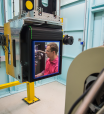
The High Performance Macromolecular Crystallography beamline will enable the study of very small (sub-5 micrometre) or weakly diffracting crystals, providing a state-of-the-art high-throughput facility for researchers. MX3 will be able to study the structures of large proteins and protein complexes for virology, drug design and industrial applications via goniometer mounted crystals, in-tray screening, or via serial crystallography methods.

ANSTO has a variety of games and apps to educate students on how radiation works, nuclear medicine, the periodic table, and atom building.

Deaf Youth Science Camp is back for 2026! Deaf Youth Science Camp (DYSC) is a fun 4-day immersive science experience for Deaf/hard-of-hearing young people (aged 12-17 years old). Held at ANSTO at Lucas Heights, Sydney, the camp is a mix of hands-on science activities, outdoor activities and excursions to nearby science centres. Participants will work with Deaf professionals to learn about careers in STEM, develop personal and leadership skills and meet new friends. This camp is hosted by Deaf Youth Australia and ANSTO, and funded by a National Science Week grant.
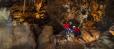
Research is being undertaken through an Australian Research Council Discovery Project "Reconstructing Australia’s fire history from cave stalagmites", led by Professor Andy Baker at UNSW Sydney and Dr. Pauline Treble at ANSTO. The project aims to calibrate the fire-speleothem relationship and develop coupled fire and climate records for the last millennium in southwest Australia.

The ANSTO Senior Leaders review and agree on issues and actions with organisation-wide significance.

The User Advisory Committee (UAC) are pleased to present this year's invited speakers.
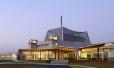
The OPAL research reactor's design and integrated safety features mean it is extremely safe; a fact confirmed by independent analysis.



The Think Science! competition encourages students in Years 3-10 to learn science inquiry skills in a fun and accessible way! Entry is FREE and there are generous prizes for winning schools. Any topic can be chosen, and special materials are not required.

Work with our scientists to deliver the best possible decommissioning outcome for your organisation.