Search hero banner

Search results

Showing 361 - 380 of 1371 results

Extracting methane from ice to understand past climate

Principal Research Scientist Andrew Smith is travelling to the Taylor Glacier in Antarctica with American collaborators on a 3-year National Science Foundation project now in its final year that involves mining tonnes of ice for palaeoclimate research.
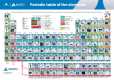
An image of a periodic table.

Periodic Table of the Elements

This illustrated periodic table explores key information about the chemical elements. 

The small poster is also compatible with the ANSTO XR app on iOS and Google play. Alternatively, downloaded posters can be printed landscape on an A3 sheet and hung on a wall to maximise usability.

Australia charges ahead with new Lithium Technology

Scientists at ANSTO together with Lithium Australia Limited (LIT) have developed a world-first technology to extract more lithium from lithium mining waste, in a game-changer for Australian lithium industry. 

Certificate of appreciation from WA DFES

ANSTO and the Australian Radiation Protection and Nuclear Safety Agency (ARPANSA) have been recognised for their valuable contributions to the search and recovery efforts for a missing 8mm-long radioactive capsule in the Western Australian outback.

Australian Synchrotron

Industry and community group tours (Australian Synchrotron, Melbourne)

Explore this world-class facility that is able to examine materials at an atomic level and learn about the broad range of important research applications from medicine to biotechnology, advanced materials and even cultural heritage. 

Guided 90-minute public tours of the Australian Synchrotron are available throughout the year.

Study of polar ice confirms carbon-climate feedback

Investigators have verified and quantified the relationship between the Earth’s land biosphere and changes in temperature and provided evidence that temperature impacts the cycling of carbon between land, ocean and the atmosphere.

Doctors viewing a SPECT scan

Radionuclides in medicine

Nuclear medicine uses radiation to provide information about the functioning of a person's specific organs to diagnose or treat disease.

For three unknown medical radionuclides, students will graph their decay over time, use the graph to calculate their half-life, and determine the identify and use of each radionuclide using background information provided.

Pagination