Collaboration publishes landmark blue carbon study
ANSTO environmental scientists contribute to investigation of carbon capture in wetlands.


Showing 361 - 380 of 680 results
ANSTO environmental scientists contribute to investigation of carbon capture in wetlands.
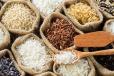
The Food Materials Science project applies nuclear-based techniques to investigate fundamental and industrial problems of national significance in food science, including food processing and product development, ingredient selection, food, and health.
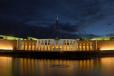
On the 10th of October 2025, the Minister for Industry, Science and Technology provided his Statement of Expectations to ANSTO.

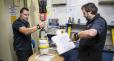
Developed by ANSTO’s predecessor the Australian Atomic Energy Commission (known as the AAEC) in the late 1960s, the Technetium-99m Generator revolutionised nuclear medicine imaging in Australia by enabling imaging procedures to be performed not only in major capital cities but throughout regional and rural Australia.
Spatz neutron reflectometer becomes 15th neutron scattering instrument that is used for studies of biological materials and other soft matter.
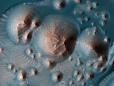
ANSTO provides a range of capabilities using neutrons, X-rays and infrared radiation to study the solids, liquids and gases that might be found in materials in our solar system and beyond.
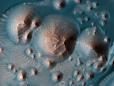
ANSTO provides a range of capabilities using neutrons, X-rays and infrared radiation to study the solids, liquids and gases that might be found in materials in our solar system and beyond.
Moving earth in the search for dark matter: laboratory construction underway at mine site.
Research on the mechanism of cell death has insights to bring progress on neurodegenerative diseases and plant biosecurity.
ANSTO proudly contributes to measures that recognise all aspects of Aboriginal and Torres Strait Islander culture and heritage during NAIDOC Week and all year.
Applications, Recent results, Publications.
ANSTO is helping change the way science is taught in the classroom - converting that dusty old periodic table into an augmented reality app that brings the elements to life.
ANSTO provides secondary students with a range of learning resources for those interested in science or studying for exams. For teachers, ANSTO provides learning resources and professional development, as well as in-school-term science tours and videoconferences. Workbooks are provided as required learning material to accompany a school visit to ANSTO. They can also be used on their own as a classroom resource.
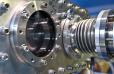
Recoil Time of Flight Spectrometry (RTOF) is used to detect a multitude of elements by separating their masses. unambiguously