Nuclear medicine production at ANSTO
Ongoing media statements relating to nuclear medicine production.


Showing 381 - 400 of 519 results
Ongoing media statements relating to nuclear medicine production.

ANSTO has secured a $1.62 million Medical Research Future Fund (MRFF) grant under the Australian Brain Cancer Mission’s 2024 Brain Cancer Discovery and Translation program, administered by the Department of Health and Aged Care.
A paper led by researchers at the University of New South Wales (UNSW) published in the PNAS last year has confirmed the theory that echidnas and platypuses descended from an aquatic ancestor with fossil evidence.

Explore topics such as biosecurity, food technology, laboratory-developed foods in the 2021 hackathon theme of Food: Different by Design

A lesson in Science and Sustainability.

Ultra-flexible electronics has many potential applications within areas such as for example the military, healthcare and energy.

You are invited to submit to the various awards from ANSTO, User Advisory Committee (UAC) and Australian Neutron Beam User Group (ANBUG).

Defence requirements push your technology, we can help. ANSTO is home to some of Australia’s most important landmark research infrastructure – more than $1.3bn of it. Our unique capabilities are used by thousands of Australian researchers from industry and academia every year.

Offered to girls in Years 5, 6 and 7, the STEAM Club encourages creative exploration of Science, Technology, Engineering and Mathematics through the Arts (the A in STEAM).
ANSTO expertise focused on understanding of reduced water levels at Thirlmere Lakes in three year collaborative project
Researchers use Kitaev theoretical model to explain unusual phenomenon in two-dimensional material.
Devices that use quantum sensors take advantage of quantum properties, unlike conventional instruments that apply classical physics in their operation.
ANSTO has contributed to a large international study which decodes a fundamental process in Earth’s history and provides guidelines regarding the types of research questions that palaeontologists can investigate using marine fossils.
(ANSTO) has welcomed the launch of the new National Science Statement and revitalised National Science and Research Priorities by Minister for Industry and Science, The Hon Ed Husic MP and Australia’s Chief Scientist, Dr Cathy Foley AO PSM.

Mia is in her second year of Mechatronics Engineering at the University of Wollongong. She has worked at ANSTO, in the first cohort of the engineering cadetship program, since July 2024.

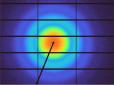
The Biological Small Angle X-ray Scattering beamline will be optimised for measuring small angle scattering of surfactants, nanoparticles, polymers, lipids, proteins and other biological macromolecules in solution. BioSAXS combines combine a state-of-the-art high-flux small angle scattering beamline with specialised in-line protein purification and preparation techniques for high-throughput protein analysis.