Showing 41 - 60 of 89 results
ANSTO inspires young women into STEM careers
To celebrate International Women’s Day, ANSTO opened its doors to more than 50 female STEM students who heard from two accomplished ANSTO’s female scientists and STEM champions.

Former student with the University of Sydney
Profile
Instrument Scientist (The triple-axis spectrometers Sika and Taipan)
Role at ANSTO

Update: Regional Cooperative Agreement (RCA) Cooperative Projects (Asia and Pacific)
ANSTO is coordinating and facilitating the calling of pre-concept papers for the next cycle of technical cooperative project proposals under the Regional Cooperative Agreement for Research, Development and Training Related to Nuclear Science and Technology for Asia and the Pacific (RCA) | IAEA
Microfluidics: the next wave of disruptive technology in radiochemistry?
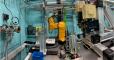
Micro-Computed Tomography beamline (MCT)
With enhanced submicron spatial resolution, speed and contrast, the Micro-Computed Tomography beamline opens a window on the micron-scale 3D structure of a wide range of samples relevant to many areas of science including life sciences, materials engineering, anthropology, palaeontology and geology. MCT will be able to undertake high-speed and high-throughput studies, as well as provide a range of phase-contrast imaging modalities.
ANSTO consolidates strong scientific ties with major German scientific organisation, Helmholtz Zentrum Berlin
Australian scientists support industry with a visionary new portable radiation imaging system
A team of Australian scientists have created a new portable device that can pinpoint the exact location of radiation sources, faster and more accurately than ever before.

Nanoprobe beamline (NANO) - under construction
The BRIGHT Nanoprobe beamline provides a unique facility capable of spectroscopic and full-field imaging. NANO will undertake high-resolution elemental mapping and ptychographic coherent diffraction imaging. Elemental mapping and XANES studies (after DCM upgrade) will be possible at sub-100 nm resolution, with structural features able to be studied down to 15 nm using ptychography.
ANSTO technology and expertise heading to Antarctica for atmosphere studies
Australian led cancer project making an impact at its first regional training course in Malaysia
The Australian led regional cancer care project in medical physics held its first regional training course in Malaysia to progress Rays of Hope.
Novel idea of recycling CO2 in mining earns scientist win in Falling Walls Lab
Dr Jessica Hamilton, a beamline scientist at the Australian Synchrotron, has won the Falling Walls Lab competition hosted by the Australian Academy of Science for her 3 minute presentation on a novel approach to using mining waste for carbon dioxide capture and a source of carbonate minerals. The event is held to deliver solutions to some of the most promising challenges of our time.
Through the looking glass: the strange atomic structure of glassy materials
The mechanical, electrical, chemical, optical and thermal properties of glass, as determined by its chemical composition and atomic structure, make it a highly useful material with a myriad of applications.
Photographer captures images inside the main ring of the Australian Synchrotron
An accomplished international photographer has capture dazzling new images of one component of the main ring at our Australian Synchrotron and provided an inside view of the electron’s path when it is used.

Advanced Diffraction & Scattering Beamlines (ADS-1 and ADS-2) UNDER CONSTRUCTION
The Advanced Diffraction and Scattering beamlines (ADS-1 and ADS-2) are two independently operating, experimentally flexible beamlines that will use high-energy X-ray diffraction and imaging to characterise the structures of new materials and minerals.

PhD student
Role at ANSTO
Strong collaborations bring success for ceramic engineering scientist
Dr Inna Karatchevtseva, who collaborates with DMTC, was among those identified by The Australian in its Research magazine as a national leader in her field of ceramic engineering
What are radioisotopes?
Radioisotopes are widely used in medicine, industry, and scientific research. New applications for radioisotopes are constantly being developed.