

Showing 41 - 60 of 421 results

Connect with ANSTO's Women in STEM
Read about an ANSTO scientist and their work to prepare for a school project or interview.

Deaf Youth Science Camp 2026
Deaf Youth Science Camp is back for 2026! Deaf Youth Science Camp (DYSC) is a fun 4-day immersive science experience for Deaf/hard-of-hearing young people (aged 12-17 years old). Held at ANSTO at Lucas Heights, Sydney, the camp is a mix of hands-on science activities, outdoor activities and excursions to nearby science centres. Participants will work with Deaf professionals to learn about careers in STEM, develop personal and leadership skills and meet new friends. This camp is hosted by Deaf Youth Australia and ANSTO, and funded by a National Science Week grant.
Enhancing the science of rivets earns researcher early career award
Dr Rezwanul Haque, now a senior lecturer at the University of the Sunshine Coast, received a national Young Scientist Award for his earlier research using nuclear techniques at ANSTO’s Australian Centre for Neutron Scattering to find cracks and signs of stress in riveted joints in sheet metal in car bodies.
Graduate Profile - Robert Raposio
A desire to give people around the world greater access to the benefits of nuclear medicine is behind Robert Raposio and his research into producing radioisotopes in more efficient, cheaper and sustainable ways.
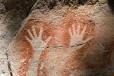
How climate change is erasing the world’s oldest rock art
Australasia is home to some of the oldest rock art motifs in the world. In tropical latitudes, due to climate change, the rock art deterioration is accelerating.
Material with molecular trapdoor holds promise for highly selective gas adsorption
An international team led by scientists at City University of Hong Kong has found flexible metal-organic framework (MOF) with one-dimensional channels that acts as a “molecular trapdoor” to selectively adsorb gases, such as carbon dioxide, in response to temperature and pressure changes.
Young researcher lighting path to see-through solar panels
Scanners to go to a new home after a decade of excellence in preclinical imaging research
Following a decade of imaging to support research and clinical trials at ANSTO and the University of Sydney’s Brain and Mind Centre at Camperdown, two PET scanners have been transferred to the University of Wollongong.
ANSTO researchers have strong presence at Quaternary Perspectives conference

2020 hackathon finalists
In partnership with the Australian Museum as part of National Science Week explore the 2020 hackathon theme of Deep Blue: Innovation for the future of our oceans
Fossils go nuclear
ISO nuclear safety certification is a first in Australia and the Southern Hemisphere
5th annual ANSTO awards in nuclear science and technology
Australian company delivers innovation in additive manufacturing using post processing technology at ANSTO
ANSTO technology and expertise heading to Antarctica for atmosphere studies
ANSTO Innovation Precinct briefing for NSW Parliament
ANSTO shared plans for an Innovation Precinct in southern Sydney at a breakfast event.
Glass is a lens to cool nuclear science during National Science Week
Scientific ingenuity at work
Contributing to research that strengthens the defence of Australia

OPAL 2024 Shutdown
ANSTO's OPAL reactor is one of the world's most advanced and reliable research reactors today. To ensure we can continue operating OPAL safely and reliably and maximise utilisation, ANSTO must regularly carry out maintenance and upgrades.