

Showing 41 - 60 of 90 results
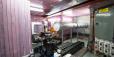
Infrastructure - Cultural Heritage
In Australia and the Southeast Asia basin, the ANSTO facility offers a wide range of unique nuclear-beam techniques for cultural heritage research.
Establishing global connections on quality seafood production and authenticty
ANSTO shares expertise on food authenticity research using nuclear techniques with Southeast Asia stakeholders.
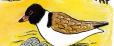
Shorebirds Competition 2020
A lesson in Science and Sustainability.

Science Series Webinars
The ANSTO Science Series is a live and virtual meet-up that focuses on the key capacities of ANSTO’s people, partners and facilities and how they are meeting global challenges in sustainable industries, medicine, advanced manufacturing and in accelerating small business.
Queensland reef scientist wins new award for erosion research
Today Dr Jenine McCutcheon from the University of Queensland’s School of Earth and Environmental Sciences has been recognised for her outstanding research with the Australian Synchrotron's Stephen Wilkins Medal.
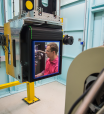
High Performance Macromolecular Crystallography Beamline (MX3)
The High Performance Macromolecular Crystallography beamline will enable the study of very small (sub-5 micrometre) or weakly diffracting crystals, providing a state-of-the-art high-throughput facility for researchers. MX3 will be able to study the structures of large proteins and protein complexes for virology, drug design and industrial applications via goniometer mounted crystals, in-tray screening, or via serial crystallography methods.
Graduate Profile - Robert Raposio
A desire to give people around the world greater access to the benefits of nuclear medicine is behind Robert Raposio and his research into producing radioisotopes in more efficient, cheaper and sustainable ways.
Predicting the impact of space radiation on satellite electrical systems
Airbus Australia Pacific has provided students participating in ANSTO’s National Graduate Innovation Forum with a practical challenge relating to technology that is exposed to damaging radiation in space.
Striving for excellence: an inspirational lecture
Nuclear medicine congress
Congress marks watershed moment for nuclear medicine and ANSTO
Anti leukaemia drug recognised with PM Prize for Innovation
The Australian Synchrotron has played a crucial role in the discovery of a new cancer drug for the treatment of leukaemia.
Scholar Profile - Phil Sutton
Since 1962, the United Uranium Scholarship has helped promising young scientists in the field of nuclear energy extend their knowledge and expertise. In 2022, scholarships were awarded to several ANSTO researchers, including Phil Sutton.
In the push and pull of crowds, disordered proteins dance precariously
A collaboration of scientists from RMIT, ANSTO and the CSIRO has published pioneering research that brings new insights into intrinsically disordered proteins and protein regions (IDPs)/ (IDRs) and how they behave under various physiological processes.

Science Research Leader and Environmental Scientist
Role at ANSTO
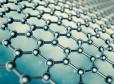
Scalable graphene growth on a semiconductor
The growth and incorporation of graphene into semiconductor device architectures has been limited by challenges related to the quality, reproducibility, and high process temperatures required to grow it on suitable substrates.

Research that matters
Sydney
The characterisation of planetary materials
ANSTO provides a range of capabilities using neutrons, X-rays and infrared radiation to study the solids, liquids and gases that might be found in materials in our solar system and beyond.
The characterisation of planetary materials
ANSTO provides a range of capabilities using neutrons, X-rays and infrared radiation to study the solids, liquids and gases that might be found in materials in our solar system and beyond.
Big Ideas Forum
Creative ideas are the spark for great innovations: this week students from across Australia got to share their ideas through ANSTO’s Big Ideas Forum.