Feather Map of Australia Project - Thank you citizen scientists of Australia
Your efforts are helping better manage our wetlands and waterways, and protect the precious wetland birds that rely on them.
Showing 41 - 60 of 70 results
Your efforts are helping better manage our wetlands and waterways, and protect the precious wetland birds that rely on them.
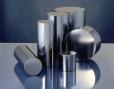
ANSTO is one of the world's leading providers of irradiation services for silicon ingots, which are used by the multimillion dollar electronics industry across Europe and Asia. Each year, ANSTO irradiates more than 50 tonnes of silicon.
The proof of concept for the approach used in the early development of the new gamma-ray imaging system has been published,
ANSTO has put together a robust multidisciplinary approach to understanding the impacts of nanomaterials, investigating a common food additive, E171 titanium dioxide, used primarily as a colouring agent in everyday foods.
Using nuclear techniques to help sustain Australia's finite groundwater resources
Experiments at the Synchrotron enable researchers to produce a 3D structure of a molecular scaffold with role in cancer
Melbourne researchers have used the Australian Synchrotron to produce structure of molecule known to play a critical role in the development and spread of aggressive cancer.
The BRIGHT Nanoprobe beamline provides a unique facility capable of spectroscopic and full-field imaging. NANO will undertake high-resolution elemental mapping and ptychographic coherent diffraction imaging. Elemental mapping and XANES studies (after DCM upgrade) will be possible at sub-100 nm resolution, with structural features able to be studied down to 15 nm using ptychography.
Energy researchers from UNSW have reported progress using controlled architectural design and structural engineering as a method to fine-tune materials to have simultaneous high power and high energy density for the electrochemical storage in portable devices.
The high-energy heavy-ion microprobe is used for the characterisation or modification of material properties at depths from approximately 1 micrometre to maximum depths of up to 500 micrometres from the material surface.
Neutron Capture Enhanced Particle Therapy developed at ANSTO.
3D models of multilayered structures on engineering scale from nanoscale damage profiles.
In Australia and the Southeast Asia basin, the ANSTO facility offers a wide range of unique nuclear-beam techniques for cultural heritage research.