Reconstructing the history of coastal erosion
Research makes it possible to assess if and how rocky coasts, which make up the majority of the world’s coasts including Australia and New Zealand, will respond to changes in marine conditions.


Showing 41 - 60 of 175 results
Research makes it possible to assess if and how rocky coasts, which make up the majority of the world’s coasts including Australia and New Zealand, will respond to changes in marine conditions.
Lake sediments as environmental archives used in compilation of data.
Radioisotope tracing technique are used to understand the uptake of contaminants, and nutrients, bioaccumulation, by aquatic organisms and terrestrial plants.


High intensity X-ray beam provides insights into the activity of natural killer cells.
An international team has published research in Nature today that identified the oldest known mummified remains of an exceptionally well-preserved terrestrial vertebrate, a 289-million-year-old reptile Captorhinus.
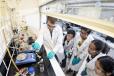
Winners of the Big Ideas Competition 2021
In association with the IAEA, ANSTO supports nuclear security in Australia, the Asia-Pacific Region, and around the world, by providing international leadership in nuclear forensic science.
ANSTO is committed to minimising the environmental impact of its activities and to implementing strategies which have a positive effect on the environment. The ANSTO Work Health Safety and Executive Committee oversees this process.
In January 2026, Mr Michael Quigley AM, ANSTO Board Chair, shared ANSTO's Statement of Intent with the Minister for Industry and Innovation, and Minister for Science.
ANSTO has signed a strategic agreement with the Australian National University and sets the relationship between the two organisations, who collaborate on important projects, such as the fusion energy project ITER and space research, well into the future.
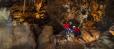
Research is being undertaken through an Australian Research Council Discovery Project "Reconstructing Australia’s fire history from cave stalagmites", led by Professor Andy Baker at UNSW Sydney and Dr. Pauline Treble at ANSTO. The project aims to calibrate the fire-speleothem relationship and develop coupled fire and climate records for the last millennium in southwest Australia.
Research collaboration with University of Sydney focuses on a personalised approach to cancer treatment.
Dr Mathew Johansen, an environmental scientist at ANSTO, presented in an online IAEA training workshop on Advanced Topics in Radiochemistry Techniques this week.