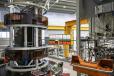
Helium 3 Polariser
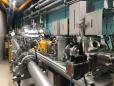
This state-of-the-art metastable-exchange optical-pumping helium-3 polarising system enables polarisation-analysis experiments on five of our existing instruments.


Showing 41 - 60 of 70 results
This state-of-the-art metastable-exchange optical-pumping helium-3 polarising system enables polarisation-analysis experiments on five of our existing instruments.
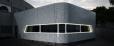
The Advanced Diffraction and Scattering beamlines (ADS-1 and ADS-2) are two independently operating, experimentally flexible beamlines that will use high-energy X-ray diffraction and imaging to characterise the structures of new materials and minerals.
Research on lunar meteorite and moon crater analogues coincides with Science Week.
Researchers and industry partners from UNSW Australia, the Australian Centre for Nanomedicine, Children’s Cancer Institute and Inventia Life Sciences Pty Ltd have been awarded the 2021 ANSTO Eureka Prize for Innovative Use of Technology for their method to rapidly-produce 3D cell structures
Three new federal grants were announced to support manufacturing and nuclear technologies.

The first demonstration of reversible symmetry lowering phase transformation with heating.
Two approaches use existing low cost and low energy technologies to reuse stockpiled waste from mining operations - capturing carbon dioxide in the form of valuable carbonate minerals.
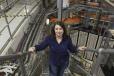
Helen's research interests focus on determining the thermoelastic properties and crystal chemistry of a range of minerals which are of interest in a variety of environmental, planetary geology and industrial settings.


Dr Meng Jun Qin is a materials scientist with expertise in computer modelling

The Medium Energy- X-ray Absorption Spectroscopy beamlines provides access to XANES and EXAFS data from a bending magnet source, optimised for cutting-edge applications in biological, agricultural and environmental science in an energy range that is not currently available at the Australia Synchrotron.

Archive of ANSTO research publications, seminars and short talks.