To D or not to D
New screening method developed to confirm if deuteration improves metabolic stability.


Showing 41 - 60 of 61 results
New screening method developed to confirm if deuteration improves metabolic stability.
ANSTO contributes to major study on global warming by measuring methane and carbon monoxide trapped in ice.
Two ANSTO environmental scientists are part of a large team led by the Australian National University (ANU), who have received an Australian Research Council Discovery Project grant to investigate how environmental change and human activities since industrialisation have impacted the transport and deposition of toxic metals on the south coast of Australia, Tasmania, and remote Southern Ocean islands.
Lithium Australia, a company that has a close association with ANSTO’s business unit Minerals, has been awarded a US patent for its unique lithium mining technology SiLeach®.
Research demonstrates the existence of hexagonal planar geometry in a transition metal complex with great potential application across multiple disciplines.
ANSTO has produced a comprehensive report for the NSW Department of Planning and Environment that represents a significant scientific investigation of the connections, pathways and processes of water loss from the Thirlmere Lakes system.
ANSTO scientists were members of an inter-disciplinary team led by the University of Sydney, who examined six 19th century West African swords, using a non-invasive multi-methodological approach to reveal the composition and manufacturing history of the iron implements.
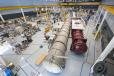
The Australian Centre for Neutron Scattering (ACNS) is a major research facility for neutron science that comprises a suite of neutron instruments with a range of techniques for scientific investigations in physics, chemistry, materials science, medicine and environmental science among other fields.
In Australia and the Southeast Asia basin, the ANSTO facility offers a wide range of unique nuclear-beam techniques for cultural heritage research.

Since the discovery of superconducting Caintercalated graphite (CaC6) the intercalation of epitaxial graphene on SiC(0001) with Ca has been studied extensively in order to achieve superconductivity.
The Australian Centre for Neutron Scattering and National Deuteration Facility have announced the first recipients of the Neutron and Deuteration Impact Awards.

ANSTO User Meeting 2021 - Speakers
Using isotopes to understand saltwater intrusion of Rottnest Island groundwater

Over the last decades, neutron, photon, and ion beams have been established as an innovative and attractive investigative approach to characterise cultural-heritage materials.

The User Advisory Committee (UAC) are pleased to present this year's invited speakers.