Accelerator technique useful for biomedical engineering
Accelerator technique used in pioneering biomaterials research led by the University of Sydney.


Showing 461 - 480 of 589 results
Accelerator technique used in pioneering biomaterials research led by the University of Sydney.
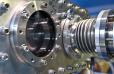
Recoil Time of Flight Spectrometry (RTOF) is used to detect a multitude of elements by separating their masses. unambiguously

Think Science! 2025 Summary and results
Neutron Capture Enhanced Particle Therapy developed at ANSTO.
Funding awarded for research on an additive manufacturing technique for use on rail infrastructure.
Neutron and gamma ghost imaging are important scientific developments reported in two publications, and the subject of an Australian Research Council Discovery Project grant awarded to a team that includes ANSTO scientists
Lake sediments as environmental archives used in compilation of data.
Professor Vanessa Peterson, Senior Principal Research and Neutron Scattering Instrument Scientist and Leader of the Energy Materials Research project, has been awarded the Bob Cheary Award or Excellence in Diffraction Analysis by the Australian X-ray Analytical Association. She is the first female to be chosen for the award.

Following your experiment at the Australian Synchrotron there are certain tasks that users can complete including a user feedback survey and claiming reimbursement for travel expenses.
Phase contrast tomography shows great promise in early stages of study and is expected to be tested on first patients by 2020.
Research to characterise how radioactive contaminants impact the surrounding environment.
Young physicist in training to become a surrogate inspector for Comprehensive Nuclear Test Ban Treaty Organisation.
Collaborators used X-ray imaging to understand the fine detail of how a damaging fungal pathogen reduces leaf function and grain yield of wheat crops.
Project focuses on enhancing crop productivity in Asia Pacific countries by improving soil and water.
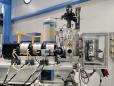
The high-energy heavy-ion microprobe is used for the characterisation or modification of material properties at depths from approximately 1 micrometre to maximum depths of up to 500 micrometres from the material surface.
Dr Luiz Bortolan Neto, a structural materials engineer at ANSTO has received an Industry Partnership award for his significant contribution to defence science at the DMTC annual conference in Canberra, last week.
An international team of academic researchers led by Curtin University have provided a description of a new species of pterosaur, a flying reptile.