

Showing 541 - 560 of 1019 results
Sharing expertise on nuclear forensics
ANSTO has hosted its second IAEA Practical Introduction to Nuclear Forensics Regional Training Course for representatives of member countries from South-East Asia, sharing expertise on the theoretical and practical aspects of nuclear forensics to respond to incidents of nuclear or other radioactive material out of regulatory control.
The microstructure of paracetamol
Analysing the microstructure of paracetamol using synchrotron infrared optical technique provides insights.
Next-generation superconductors
Insights into atomic structure
FNCA Meeting
Combining resources and expertise to address climate change in the Asia-Pacific
Environment researchers share expertise
Project focuses on enhancing crop productivity in Asia Pacific countries by improving soil and water.
Scanners to go to a new home after a decade of excellence in preclinical imaging research
Following a decade of imaging to support research and clinical trials at ANSTO and the University of Sydney’s Brain and Mind Centre at Camperdown, two PET scanners have been transferred to the University of Wollongong.
Innovation forum will benefit graduates and Australian industry
The first National Graduate Innovation Forum will be held in November to connect PhD students with representatives from four of Australia’s leading industries to apply scientific thinking to current real-world challenges.
Experts share knowledge of nuclear medicine in live online forum
ANSTO recently hosted a public Ask Us Anything event on nuclear medicine, sharing information on how we safely manufacture and distribute nuclear medicine across Australia each week to hundreds of hospitals and clinics.
Imaging at ANSTO supported Curtin University-led research that discovered the oldest 3D heart in a 380-million-year-old fossilised fish
Researchers have discovered a 380-million-year-old heart – the oldest ever found – alongside a separate fossilised stomach, intestine and liver in an ancient jawed fish, shedding new light on the evolution of our own bodies.
Helping to support the environmental future of Antarctica
The start of ANSTO’s research to support the Securing Antarctica’s Environmental Future (SAEF) program commenced with the official launch of the program and the departure of two students from Queensland University of Technology (QUT), who are affiliated with ANSTO to Antarctica’s Macquarie Island for six months to collect environmental samples as part of the (SAEF) program.
Pioneering collaboration advances nuclear medicine
This joint initiative at ANSTO has developed a new capability: solid surface radiolabelling to evaluate Auger emitting sources for next-generation targeted therapy.
The composition and manufacturing history of African swords revealed
ANSTO scientists were members of an inter-disciplinary team led by the University of Sydney, who examined six 19th century West African swords, using a non-invasive multi-methodological approach to reveal the composition and manufacturing history of the iron implements.
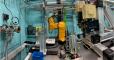
Micro-Computed Tomography beamline (MCT)
With enhanced submicron spatial resolution, speed and contrast, the Micro-Computed Tomography beamline opens a window on the micron-scale 3D structure of a wide range of samples relevant to many areas of science including life sciences, materials engineering, anthropology, palaeontology and geology. MCT will be able to undertake high-speed and high-throughput studies, as well as provide a range of phase-contrast imaging modalities.
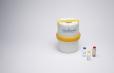
ANSTO's Gentech® Generator
Supporting healthcare professionals in Australia with easy-to-access resources related to ANSTO’s Gentech® Generator.
Aboriginal ochre art under high-tech ‘hands-off’ focus to map culture trail
ANSTO environmental scientists highlight need to monitor legacy nuclear fallout in Antarctica
ANSTO environmental scientists have alerted the scientific community of the critical need to monitor changes to ice containing potential nuclear fallout that reached Antarctica from 20th century atmospheric weapons testing.