Food science: Insight into emulsions
Neutron scattering techniques help characterise the structure of a particle based emulsifier


Showing 561 - 580 of 1716 results
Neutron scattering techniques help characterise the structure of a particle based emulsifier

Creating a safe, inclusive and respectful online community for all.
Five exceptional female science communicators are part of a larger team who use skills in education and engagement to promote an interest in science amongst the public and students.
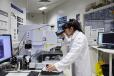
The Infrared Microspectroscopy beamline combines the high brilliance and collimation of the synchrotron beam through a Bruker V80v Fourier Transform Infrared (FTIR) spectrometer and into a Hyperion 3000 IR microscope to reach high signal-to-noise ratios at diffraction limited spatial resolutions between 3-8 μm.
Accurate ‘fingerprinting’ tool to verify source of origin is in development with collaborators from academia and industry.
An Australian-led international research team, including a core group of ANSTO scientists, has found that doping a promising material provides a simple, effective method capable of extracting uranium from seawater.

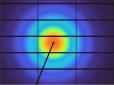
The Biological Small Angle X-ray Scattering beamline will be optimised for measuring small angle scattering of surfactants, nanoparticles, polymers, lipids, proteins and other biological macromolecules in solution. BioSAXS combines combine a state-of-the-art high-flux small angle scattering beamline with specialised in-line protein purification and preparation techniques for high-throughput protein analysis.
ANSTO researchers are undertaking the fabrication and characterising advanced fuels and investigating the key properties of nuclear waste and its long-term interaction with containment materials to improve safety for short and long-term storage.
ANSTO has been licensed as the Australian manufacturing partner of an innovative, non-invasive treatment for non-melanoma skin cancer (NMSC).
How difficult is it to relate your hard-coating failures to the chemical makeup of a material?
Scientists from Monash, ANSTo and China have developed an ultra-thin membrane that could separate harmful ions from water or capture gases.
The nuclear medicine community has welcomed the Australian Government’s decision to provide $30 million in funding to ANSTO for the design of a new nuclear medicine manufacturing facility.
A long-standing collaboration led biomedical researchers from the University of Sydney has recently achieved success with the recent announcement of an innovative bone implant that significantly reduces rejection and inflammation.
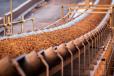
Our world is rapidly transitioning to renewable energy and electric transport systems that require the safe and efficient mining of various metals.