
After your experiment
Following your experiment at the Australian Synchrotron there are certain tasks that users can complete including a user feedback survey and claiming reimbursement for travel expenses.


Showing 581 - 600 of 1171 results
Following your experiment at the Australian Synchrotron there are certain tasks that users can complete including a user feedback survey and claiming reimbursement for travel expenses.
The Nobel Prizes for Physics, Chemistry and Medicine have been announced.
Elucidating molecular basis of the complex viscoelastic properties of polymers
Four annual awards in neutron scattering were announced at Australian Neutron Beam Users Group (ANBUG) and AINSE Neutron Scattering Symposium (AANSS) to individuals with strong links to ANSTO
Primary students across Australia were invited to create a public awareness poster for a threatened shorebird found in Australia for our 2020 Shorebirds Competition. In response to COVID-19, and the changes to children’s learning environments, we opened the competition early and also included categories for individual children to enter, as well as school children.
A team of scientists from The Australian National University (ANU) has discovered how a powerful “weapon” used by many fungal pathogens enables them to cause disease in major food crops such as rice and corn
Particle induced X-ray emission can be used for quantitative analysis in archaeology, geology, biology, materials science and environmental pollution.
An international research collaboration between the University of New South Wales (UNSW), the Shanghai Institute of Applied Physics (SINAP) and ANSTO has provided insights into the performance of advanced material for use in the high-temperature environment of molten salt systems.
Professor Vanessa Peterson, Senior Principal Research and Neutron Scattering Instrument Scientist and Leader of the Energy Materials Research project, has been awarded the Bob Cheary Award or Excellence in Diffraction Analysis by the Australian X-ray Analytical Association. She is the first female to be chosen for the award.
A large international research team led by Academia Sinica in Taiwan investigated how heat is transferred in an advanced thermoelectric material made with germanium (Ge) and tellurium (Te) and doped with antimony (Sb). These devices are used to power space probes such as the Mars Curiosity Rover.
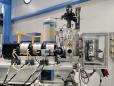
The high-energy heavy-ion microprobe is used for the characterisation or modification of material properties at depths from approximately 1 micrometre to maximum depths of up to 500 micrometres from the material surface.
Dr Mitra Safavi Naeini continues her commentary of the radiation studies being undertaken in the Artemis II mission.
Research confirms that fraudulent Kakadu plum extracts are in circulation online and in the international marketplace.
With all excavation completed and rock removed from the underground site, the physics lab will now be built within the caverns of the Stawell Mines site.
Atmospheric scientists have developed a new technique to measures the naturally-occurring radioactive gas radon for use in accurately categorising the degree of atmospheric mixing.
Imaging protocol assesses molecular mechanism of work in the treatment of deadly childhood cancer neuroblastoma.