Materials in extreme environments
Materials researchers focus on development, performance and in-service degradation of nickel-based superalloys, reinforced carbon-Carbon (C/C) composites, and ultra-high temperature ceramics (UHTC).
Showing 61 - 80 of 278 results
Materials researchers focus on development, performance and in-service degradation of nickel-based superalloys, reinforced carbon-Carbon (C/C) composites, and ultra-high temperature ceramics (UHTC).
The Chair of ANSTO, The Hon Dr Annabelle Bennett, AC SC, announced today that Mr Shaun Jenkinson has been reappointed as the Chief Executive Officer of ANSTO.
PNG researcher provides a progress update on an aquaculture project to improve the industry and benefit the local population
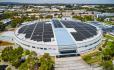
A world-class national research facility that uses accelerator technology to produce a powerful source of light-X rays and infrared radiation a million times brighter than the sun.
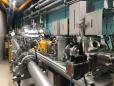
The Medium Energy- X-ray Absorption Spectroscopy beamlines will provide access to XANES and EXAFS data from a bending magnet source, optimised for cutting-edge applications in biological, agricultural and environmental science in an energy range that is not currently available at the Australia Synchrotron.
The ANSTO Awards in Nuclear Science and Technology 2018 were presented on Friday 2 November at The Australian Museum, and showcased ANSTO’s unique nuclear science and technology capabilities, which enable progress in the key areas of health research and innovation for industry.
ANSTO’s unique capabilities in cosmogenic nuclides included in glacial study grant.
COVID-19 can’t stop kids with a passion for science and technology, with ANSTO launching our new online STEAM Club just in time for the school holidays.
Jobs supported through the nandin Innovation Centre at ANSTO have skyrocketed 360 per cent since opening, with member businesses raising more than $3.9 million in capital, in a major boost for the local Sutherland Shire economy.
In space, without the protection of the magnetosphere, the type and dose of radiation is considerably different to what is naturally experienced on earth. However, it is the secondary particles of lower energies created when galactic and cosmic radiation interacts with shielding that is of concern for astronauts.
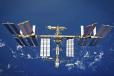
In collaboration with the French National Institute of Health and Medical Research (INSERM) and the French International Space Agency (CNES), ANSTO scientists are undertaking research on the radiobiological effects of secondary particles that are created when radiation interacts with the shielding on the International Space Station.
ANSTO operates a range of cobalt-60 gamma irradiators, providing the Australian community with a range of irradiation services for medical, health, industry, agriculture and research purposes.
Frequently asked questions about ANSTO for the community.
Your efforts are helping better manage our wetlands and waterways, and protect the precious wetland birds that rely on them.
ANSTO provides trusted advice, training and consultancy services to Australia’s resource sector.
When an energetic ion beam hits a sample it will interact with the atoms through a number of very complex interactions. By detecting and measuring the reaction products resulting from the various interactions and their intensities, you can obtain quantitative data on the sample's constituent elements and their spatial distribution.
ANSTO is a highly regulated organisation. Our governance system and processes provide critical guidance to effectively manage ANSTO’s activities. This section outlines the processes and systems that are in place to provide assurance to Government, our stakeholders and the community that we are working within our regulated and mandated requirements.
Work with our scientists to deliver the best possible decommissioning outcome for your organisation.