Carbon ion therapy research
ANSTO research focuses on an advanced form of cancer treatment under consideration in Australia.


Showing 61 - 80 of 136 results
ANSTO research focuses on an advanced form of cancer treatment under consideration in Australia.
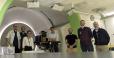
ANSTO has secured a $1.62 million Medical Research Future Fund (MRFF) grant under the Australian Brain Cancer Mission’s 2024 Brain Cancer Discovery and Translation program, administered by the Department of Health and Aged Care.
Scientists at ANSTO characterise structures with atomic detail using probes such as x-rays, electrons, neutrons and ions.
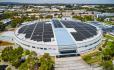
A world-class national research facility that uses accelerator technology to produce a powerful source of light-X rays and infrared radiation a million times brighter than the sun.

ANSTO Publications Online is a digital repository for publications authored by ANSTO staff and collaborators since 1956.
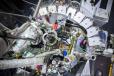
At ACNS we currently have 13 instruments in our user program, which use a variety of scattering techniques to probe materials over a range of length scales.
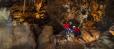
Research is being undertaken through an Australian Research Council Discovery Project "Reconstructing Australia’s fire history from cave stalagmites", led by Professor Andy Baker at UNSW Sydney and Dr. Pauline Treble at ANSTO. The project aims to calibrate the fire-speleothem relationship and develop coupled fire and climate records for the last millennium in southwest Australia.
ANSTO has been tracking and publishing data on fine particle pollution from key sites around Australia, and internationally, for more than 20 years.
Publications and resources from the Powder Diffraction beamline.
Four annual awards in neutron scattering were announced at Australian Neutron Beam Users Group (ANBUG) and AINSE Neutron Scattering Symposium (AANSS) to individuals with strong links to ANSTO
The Advanced Diffraction and Scattering beamlines (ADS-1 and ADS-2) are two independently operating, experimentally flexible beamlines that will use high-energy X-ray diffraction and imaging to characterise the structures of new materials and minerals.
Radiocarbon study provides insight into soil carbon dynamics and effects of agriculture.
Nuclear security experts and officials from Australia’s nuclear agencies have convened at the International Atomic Energy Agency’s (IAEA) headquarters in Vienna, Austria last week for the International Conference on Nuclear Security (ICONS).