Global honour for ANSTO researcher
Prof Lyndon Edwards recognised for for excellent sustained contribution to materials engineering


Showing 661 - 680 of 989 results
Prof Lyndon Edwards recognised for for excellent sustained contribution to materials engineering

ANSTO provides a summary of waste production and consumables for FY2022 - FY2023
nandin member, SVSR, report on their proof-of-concept for a reusable Graphene Oxide (GO) membrane to capture waste water vapours from ageing sewerage systems.


An article in Nature Geosciences has highlighted the power of synchrotron techniques to reveal the inner workings of volcanic systems that could potentially help with predictions of eruptions.
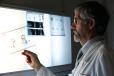
Osteoporosis is a major public health issue, and it has been estimated that total annual cost of osteoporosis/osteopenia in Australia is around $2,754 million.

The winners of the 2018 ANSTO Top Coder Competition were decided at two keenly contested grand finals with Robotics hosted by UTS and Coding held at the ANSTO Discovery Centre.
A large collaboration of Australian and New Zealand researchers has established that a thin film technology can be used to monitor stormwater effectively and provides a way to translate the presence of metal contaminants into potential risks to aquatic ecosystems.
The first National Graduate Innovation Forum will be held in November to connect PhD students with representatives from four of Australia’s leading industries to apply scientific thinking to current real-world challenges.
On behalf of Australia, ANSTO, the only nuclear reactor facility in Australia, supports the International Atomic Energy Agency (IAEA) to undertake its role in facilitating national, regional, and international efforts to enhance nuclear security, including measures to protect against nuclear terrorism.
Radiocarbon measurements at ANSTO’s Centre for Accelerator Science have supported research published that provided insights into what the environment was like for the Aboriginal artists who created rock art over intervals spanning 43,000 years.

A major study has identified urbanisation and climate change as future threats to drinking water quality.