
Lecturer
My name is Paris and I am a lecturer at the Design Factory Melbourne, a Graduate of architecture and a member of the MedTech Victoria research team at Swinburne.


Showing 661 - 680 of 796 results
My name is Paris and I am a lecturer at the Design Factory Melbourne, a Graduate of architecture and a member of the MedTech Victoria research team at Swinburne.
Dr Jessica Hamilton, a beamline scientist at the Australian Synchrotron, has won the Falling Walls Lab competition hosted by the Australian Academy of Science for her 3 minute presentation on a novel approach to using mining waste for carbon dioxide capture and a source of carbonate minerals. The event is held to deliver solutions to some of the most promising challenges of our time.
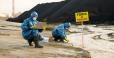
Billions of tonnes of iron ore tailings are generated each year from the mining industry. Converting these toxic tailings into soil-like materials which can develop and sustain plant and microbial communities is critical for mine site remediation and improved environmental outcomes.
University of Melbourne researchers have investigated a method to produce magnetic nanoparticles in Australia for use in COVID-19 PCR tests.
Australia and Sri Lanka develop action plan to fight Chronic Kidney Disease killer
Analysis of environmental samples (predominantly soils, groundwaters, vegetation and biota) for the presence of radionuclide via chromatographic separation methods.
The Hungarian Ambassador to Australia and a small delegation visited ANSTO for a special ceremony to mark the installation and commissioning of two new nuclear medicine scanners from the Hungarian company Mediso Pacific.
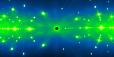
Sample environments, Data analysis and reduction on the Koala instrument.
Researchers from UNSW have found an extraordinary material that does expand or contract over an extremely wide temperature range and may be one of the most stable materials known.
Radiation can be described as energy or particles from a source that travel through space or other mediums. Light, heat, and wireless communications are all forms of radiation.
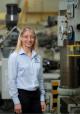
Bianca Shepherd is ANSTO’s Engineering Support Workshop Manager, confidently overseeing the manufacture and fabrication of equipment and specialised parts for critical Australian scientific and landmark infrastructure.
A lift for fish at Tallowa Dam: Study on dietary impacts.
The Australian Centre for Neutron Scattering and National Deuteration Facility have announced the first recipients of the Neutron and Deuteration Impact Awards.
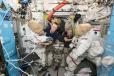
This program explores the mechanism and outcome of the interaction of radiation on biological systems in order to improve our understanding of the impact of radiation on the brain, optimise radiotherapy and develop mitigation strategies for space travellers.
Research demonstrates the existence of hexagonal planar geometry in a transition metal complex with great potential application across multiple disciplines.