Stardust, the sea and an ancient cosmic collision
Debris is still raining down on Earth more than 100 million years after the giant cosmic explosion that created it.


Showing 681 - 700 of 1019 results
Debris is still raining down on Earth more than 100 million years after the giant cosmic explosion that created it.

ANSTO has produced a comprehensive report for the NSW Department of Planning and Environment that represents a significant scientific investigation of the connections, pathways and processes of water loss from the Thirlmere Lakes system.
An investigation that set out to resolve some of the uncertainty in the sources and quantities of pollutants reaching Antarctica has produced a new experimental technique to identify and characterise recently terrestrially-influenced air reaching Antarctica.

Read about an ANSTO scientist and their work to prepare for a school project or interview.

ANSTO recognised the contribution of individuals and teams to nuclear science and technology at the 2023 ANSTO Awards Ceremony held on 25 July.
Phase contrast tomography shows great promise in early stages of study and is expected to be tested on first patients by 2020.
The Nobel Prizes for Physics, Chemistry and Medicine have been announced.
Australia part of global renaissance in fusion power research symbolised by ITER experiment
3D models of multilayered structures on engineering scale from nanoscale damage profiles.
Four annual awards in neutron scattering were announced at Australian Neutron Beam Users Group (ANBUG) and AINSE Neutron Scattering Symposium (AANSS) to individuals with strong links to ANSTO
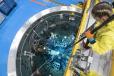

ANSTO User Meeting 2021 - Speakers
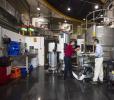
ANSTO offers a diverse range of career opportunities within science, engineering, corporate services and trade disciplines.
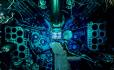
Radiation can be described as energy or particles from a source that travel through space or other mediums. Light, heat, and wireless communications are all forms of radiation.