Evidence of quantum state in spin cluster chain
Phenomenon predicted by Nobel Prize recipient


Showing 701 - 720 of 1717 results
Phenomenon predicted by Nobel Prize recipient
ANSTO provides nuclear forensic analysis and advice in support of law enforcement and training to domestic and international partners
Particle Induced X-ray Emission (PIXE) is a powerful and relatively simple analytical technique that can be used to identify and quantify trace elements typically ranging from aluminium to to uranium.
Dr Anne Hellstedt has been appointed Director of ANSTO’s Innovation Precinct.
Using neutron imaging techniques at ANSTO, researchers from Macquarie University have gained a better understanding of how corrosion forms and spreads through concrete that is commonly used in sewer pipes.
New class of conducting materials found for potential use in next generation fuel cells and other applications.
ANSTO renewed its Memorandum of Understanding (MOU) with the Japan Proton Accelerator Research Complex (J-PARC) operated by the High Energy Accelerator Research Organisation (KEK) and Japan Atomic Energy Agency (JAEA). Now broadened to include their partner Comprehensive Research Organization for Science and Society (CROSS), the signing took place early in the year and a celebratory workshop was held late July.
Incredible Insect Competition Winners of 2021. Digital colouring-in competition.
Tool developed for producing F-18 radiopharmaceuticals for PET imaging.
ANSTO is now accepting applications for three Director positions within the Nuclear Science and Technology group: The Director of the Nuclear Materials Research and Technology Group, Director of Environment Research and Technology Group and Director of the Health Research and Technology Group.
ANSTO and the National University of Singapore have signed an agreement to enable Singapore researchers to access ANSTO’s state-of-the-art beamline facilities at the Australian Synchrotron.
Sample environments, Data analysis.
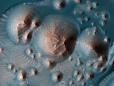
ANSTO provides a range of capabilities using neutrons, X-rays and infrared radiation to study the solids, liquids and gases that might be found in materials in our solar system and beyond.
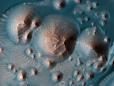
ANSTO provides a range of capabilities using neutrons, X-rays and infrared radiation to study the solids, liquids and gases that might be found in materials in our solar system and beyond.