ANSTO's National Science Week events
National Science Week is a time to celebrate science and the important role national science agencies like ANSTO play in delivering outcomes that benefit all Australians.


Showing 741 - 760 of 2173 results
National Science Week is a time to celebrate science and the important role national science agencies like ANSTO play in delivering outcomes that benefit all Australians.
After careful selection, three Australian science teachers are set to fly to Geneva today after winning positions on the International High School Teacher Programme at CERN.
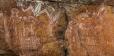
Research to identify past human interactions with the environment and clarify information which may result from human impact or responses to changing environments.

As blood breaks down in the skin tissue, the colour of a bruise changes with time. As such, it may be used to find out information about the age of the bruise and hence a timeframe of when the incident that caused the mark took place.
The installation of a cold neutron source (CNS), a component that reduces the energy and speed of the neutrons from a research reactor for use in scientific instruments, was successfully completed in September 2024.
Unique opportunity to contribute to the long term conservation of Australia’s most iconic landmark: The Sydney Harbour Bridge.
Nuclear engineer, Robert Mardus-Hall, with his research partner Andrew Pastrello, are developing nuclear power based solutions for space missions to the Moon and Mars.

ANSTO may provide travel and accommodation support to successful grant applicants from AINSE member organisations. Travel funds granted are to be used solely to cover the majority of the cost to travel to Sydney.
During the scheduled shutdown of the OPAL multi-purpose reactor, an ANSTO engineering and project team has installed a new safety shutdown instrumentation and control system (I&C).

Researchers from ANSTO and NASA’s Jet Propulsion Laboratory have uncovered the likely mineral composition of Saturn’s largest moon, Titan, revealing a world of exotic organic crystals unlike any found on Earth.
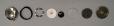
How to prepare samples for analysis on the Powder Diffraction beamline.
Research has helped build a record of rainfall during the late Pleistocene and Holocene, and shed light on the strategies of Indigenous Australians to cope with a changing landscape.
The Australian Government recently signed a landmark emissions reduction technology deal with Great Britain, which includes nuclear energy and clean hydrogen among the six key low emission technologies the two countries hope to advance.
Eighteen Deaf and hard-of-hearing young people aged 12 to 17 from around Australia descend on ANSTO’s Lucas Heights campus for Deaf Youth Science Camp today.
Researchers and industry partners from UNSW Australia, the Australian Centre for Nanomedicine, Children’s Cancer Institute and Inventia Life Sciences Pty Ltd have been awarded the 2021 ANSTO Eureka Prize for Innovative Use of Technology for their method to rapidly-produce 3D cell structures

New international limits on the cadmium content of cacao products have spurred research to discover how cadmium accumulates in cacao beans, and the effects of processing.

The Planetary Materials theme at ANSTO is co-ordinated by Helen Maynard-Casely and Helen Brand.