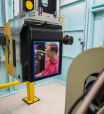
The High Performance Macromolecular Crystallography beamline will enable the study of very small (sub-5 micrometre) or weakly diffracting crystals, providing a state-of-the-art high-throughput facility for researchers. MX3 will be able to study the structures of large proteins and protein complexes for virology, drug design and industrial applications via goniometer mounted crystals, in-tray screening, or via serial crystallography methods.

Wasteform Scientist
Role at ANSTO

Senior Scientist - X-ray Fluorescence Microscopy
Role at ANSTO
In a new study published in Nature Communications, researchers from UNSW have demonstrated a more sustainable alternative: an electrochemical pathway that couples carbon dioxide and nitrogen-containing species to produce urea under mild conditions.
Lake sediments as environmental archives used in compilation of data.
A large international team has provided an understanding of how nanoscale interactions affect the thermal stability of a type of next generation organic solar cells.
ANSTO has contributed to a recent publication in Nature Communications Biology that represents a landmark achievement in structural biology, an understanding of protein regulation mechanisms in Mycobacterium tuberculosis (Mtb), a global health threat.
Professor of Soil Science at The University of Queensland, Peter Kopittke and partner investigator Prof Enzo Lombi of the University of SA are very optimistic about the use of a new synchrotron-based imaging technique that captures in 3D the complex interaction of soil and root.
Highlights of the Energy Materials Project.

Specialist Hydrometallurgist
John Lawson is a Specialist Hydrometallurgist working with the ANSTO Minerals business unit.

Director, National Deuteration Facility
Role at ANSTO
Senior Scientist - Powder Diffraction
Helen's research interests focus on determining the thermoelastic properties and crystal chemistry of a range of minerals which are of interest in a variety of environmental, planetary geology and industrial settings.

Beamline Scientist (BioSAXS)
Role at ANSTO

Instrument Scientist
Role at ANSTO
Molten Salt Reactors (MSRs) are nuclear reactors that use a fluid fuel in the form of very hot fluoride or chloride salt rather than the solid fuel used in most reactors. Since the fuel salt is liquid, it can be both the fuel to produce heat and the coolant to transport the heat to a power plant.
The complex engineering of scientific instruments is explored in this 'behind the scenes' look at the installation of frontends for two new beamlines at the Australian Synchrotron.

Lead, Food Materials Science; Instrument Scientist, QUOKKA (Small-Angle Neutron Scattering); Honorary Professor, CNFS, The University of Queensland
Role at ANSTO
Using the past to illuminate the future: Brothers collaborate on important science documentary for ABC TV
Instrument Scientist
Role at ANSTO
Pagination