
Board Member, Member Risk and Audit Committee
Professor Senden is an accomplished physical chemist and currently is the Pro Vice-Chancellor (Research Infrastructure and Entities) at the Australian National University.


Showing 81 - 100 of 173 results
Professor Senden is an accomplished physical chemist and currently is the Pro Vice-Chancellor (Research Infrastructure and Entities) at the Australian National University.
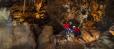
Research is being undertaken through an Australian Research Council Discovery Project "Reconstructing Australia’s fire history from cave stalagmites", led by Professor Andy Baker at UNSW Sydney and Dr. Pauline Treble at ANSTO. The project aims to calibrate the fire-speleothem relationship and develop coupled fire and climate records for the last millennium in southwest Australia.


The project aims to engage the wider cultural heritage community in addition to our internal research.
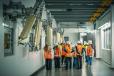
ANSTO participation in ARC on Intelligent Robotic Systems for Real-time Asset Management has potential benefit in the management of infrastructure and assets
The need for a smaller, more transportable version of ANSTO’s 1500-litre atmospheric radon-222 monitor, and with a calibration traceable to the International System of Units, prompted the team to develop a 200-litre radon monitor that would meet those needs.
A team of researchers including the University of Rochester, CSIRO and ANSTO has found methane emissions from human fossil sources have been greatly underestimated.
Australia is supporting a new regional initiative led by Fiji in partnership with the International Atomic Energy Agency (IAEA) under the Regional Cooperative Agreement for Research, Development and Training Related to Nuclear Science and Technology for Asia and the Pacific (RCA) to strengthen food security across Asia and the Pacific using nuclear science and technology.
Pioneering work on materials for energy production, such as lithium ion batteries, has made ANSTO a centre of specialist capabilities and expertise.
The Australian Nuclear Science and Technology Organisation (ANSTO) has joined a team, lead by the US Department of Energy’s Pacific Northwest National Laboratory (PNNL), to install a high resolution monitoring system at ANSTO’s medical isotope production facility in Lucas Heights, Australia.
Evidence of the earliest occupation of the coasts of Australia from Barrow Island, Northwest Australia.
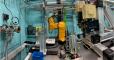
With enhanced submicron spatial resolution, speed and contrast, the Micro-Computed Tomography beamline opens a window on the micron-scale 3D structure of a wide range of samples relevant to many areas of science including life sciences, materials engineering, anthropology, palaeontology and geology. MCT will be able to undertake high-speed and high-throughput studies, as well as provide a range of phase-contrast imaging modalities.
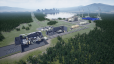
Molten Salt Reactors (MSRs) are nuclear reactors that use a fluid fuel in the form of very hot fluoride or chloride salt rather than the solid fuel used in most reactors. Since the fuel salt is liquid, it can be both the fuel to produce heat and the coolant to transport the heat to a power plant.

ANSTO's OPAL reactor is one of the world's most advanced and reliable research reactors today. To ensure we can continue operating OPAL safely and reliably and maximise utilisation, ANSTO must regularly carry out maintenance and upgrades.
Three new federal grants were announced to support manufacturing and nuclear technologies.