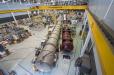
Nuclear propulsion systems
ANSTO researchers are investigating nuclear propulsion systems for applications on the sea and in space.
Showing 81 - 100 of 178 results
ANSTO researchers are investigating nuclear propulsion systems for applications on the sea and in space.
Thirty years of ANSTO's unique capability in monitoring fine particle pollution provides insight on bushfire smoke.
Research on the mechanism of cell death has insights to bring progress on neurodegenerative diseases and plant biosecurity.
ANSTO has agreed to participate in an Australian trial of a review of research infrastructure access proposals in which applicants remain anonymous to aid the removal of structural barriers to the career progression of Women in STEM.
You are invited to submit to the various awards
View the upcoming proposal deadlines for access to ANSTO’s Research Portal. The User Office provides support for research proposals and enables you to leverage our world-class research infrastructure and facilities.
Nuclear power is used as a reliable and clean energy solution in most OECD countries and many other parts of the world. Although it is banned in Australia, a number of government reviews are looking at current prohibitions on nuclear power.
Detailed molecular structure of silver nanocrystals determined
With a well-established portfolio of nuclear research and the operation of Australia's only nuclear reactor OPAL, ANSTO scientists conduct both fundamental and applied research on fuel for current, advanced, and future nuclear technology systems.
Dr Joseph Bevitt is a senior instrument scientist on the Dingo radiograph/tomography/imaging station, and scientific coordinator for the Australian Centre for Neutron Scattering.
Health researchers at ANSTO use world-class nuclear and isotopic techniques to undertake research and development activities to address some of the most challenging health problems.
International palaeontologists have used advanced imaging techniques at ANSTO’S Australian Synchrotron to clarify the role that the earliest fruit-eating birds of the Cretaceous period may have had in helping fruit-producing plants to evolve.
The High Performance Macromolecular Crystallography beamline will enable the study of very small (sub-5 micrometre) or weakly diffracting crystals, providing a state-of-the-art high-throughput facility for researchers. MX3 will be able to study the structures of large proteins and protein complexes for virology, drug design and industrial applications via goniometer mounted crystals, in-tray screening, or via serial crystallography methods.
Atomic structure of new cathode material for sodium ion batteries helps explain long life
Below lists some useful programs for data reduction, search matching, analysis and structure visualisation of diffraction data.