

Showing 861 - 880 of 1566 results
Students tackle a real-world challenge regarding dissimilar-metal corrosion in a project supported by BlueScope
Air pollution in Antarctica
Call for Proposals
Scientific ingenuity + design powers challenge-based innovation
A 'Challenge-Based Innovation' platform at the nandin Innovation Centre is progressing as part of a funding package from the NSW Government and a Memorandum of Understanding with Swinburne University of Technology and Design Factory Melbourne (DFM).
Creating a Feather Map to track waterbirds and inform water resource management
Interstellar measurements at ANSTO provide new insights into the formation of gold and other heavy elements
ANSTO’s Centre for Accelerator Science measures extra-terrestrial plutonium in a study to clarify the origin of the heavier elements
X-ray absorption spectroscopy
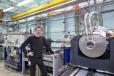
X-ray absorption spectroscopy (XAS) is a versatile tool for chemistry, biology, and materials science. By probing how x rays are absorbed from core electrons of atoms in a sample, the technique can reveal the local structure around selected atoms.
New beamline provides state-of-the-art imaging capability
The new Micro Computed Tomography (MCT) beamline is the first instrument to become operational as part of the $94 million Project BRIGHT program, which will see the completion of eight new beamlines at ANSTO’s Australian Synchrotron.
Part 1: An explanation of the three-body problem featured in science fiction series
Two ANSTO physicist explain the three-body problem as featured in science fiction series of the same name
Instrument scientist featured in publication for PhD students
Innovator in energy and sustainability uses power of synchrotron light to make advances
Fish lift
A lift for fish at Tallowa Dam: Study on dietary impacts.
Neutrons: Key tool in modern manufacturing of aircraft components
Simulating phase transformations during the welding of ferritic steels
Frontiers of synchrotron research suggest even brighter future for materials science and engineering
Japanese scientists collaborate on self-healing ceramics for nuclear reactors
ANSTO researchers have taken up the challenge to develop a coating for the cladding used in nuclear reactors to prevent it from taking up hydrogen and releasing it if temperatures get too high and repair itself if damaged.
Rhodium nanoparticles
Successful synthesis of nano-material that improves catalytic converter efficiency.
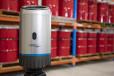
CORIS360® case studies
FLEET appointment
Instrument scientist and expert in low dimensional magnetism Dr Kirrily Rule joins FLEET ARC Centre.