ANSTO is the new production partner of OncoBeta® GmbH in Australia
Innovative medical device Rhenium-SCT® therapy for non-melanoma skin cancer is now available in Australia


Showing 901 - 920 of 929 results
Innovative medical device Rhenium-SCT® therapy for non-melanoma skin cancer is now available in Australia
Rare earth elements will be a key area of focus for the Australian Nuclear Science and Technology Organisation’s Minerals unit as it welcomes a $13.9 million funding allocation under the Australian Critical Minerals Research and Development Hub
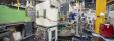
Kowari, a residual stress diffractometer, can be used for ‘strain scanning’ of large engineering components as large as 1000 kilograms.
ANSTO highlighted its food origin research with live shows and an expert panel discussion to showcase Australian science in the Australia Pavilion at the Expo 2025 Osaka from 8-10 October.


Creating a global energy system that is both environmentally and economically sustainable is unquestionably one of the largest challenges facing the scientific and engineering communities.
A new study by researchers from Curtin University using the infrared (IR) and X-ray fluorescence microscopy (XFM) beamlines at the Australian Synchrotron has provided a better understanding of the chemical and elemental composition of latent fingermarks.


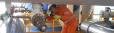

Insights into the formation of deep river canyons mountain ranges in intra-tectonic plate areas by SAAFE Scholarship recipient and collaborators.
Retrieving an Antarctic ice core more than a million years old presents challenges and opportunities.
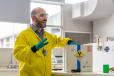
It's ANSTO's role to keep Australia across the very latest developments in nuclear science and technology from around the world. Part of this responsibility is keeping us abreast of the latest developments in nuclear power technologies.
From June to August we invited primary schools in Greater Sydney/Illawarra and Melbourne to participate in our 2019 Shorebirds Competition. Students in Years 3 to 6 were asked to create a public awareness poster for a threatened shorebird found in Australia.