

Showing 101 - 120 of 193 results
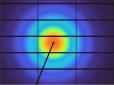
Biological small angle X-ray scattering beamline (BioSAXS)
The Biological Small Angle X-ray Scattering beamline will be optimised for measuring small angle scattering of surfactants, nanoparticles, polymers, lipids, proteins and other biological macromolecules in solution. BioSAXS combines combine a state-of-the-art high-flux small angle scattering beamline with specialised in-line protein purification and preparation techniques for high-throughput protein analysis.
Interactions of nanoplastics
Exploring the interaction of polystyrene nanoplastics and blood plasma proteins.

STEAM Club Online
Learn. Create. Innovate
Compressed sensing technology
Using the theory of compressed sensing technology, a team of physicists and scientists invented and developed the CORIS360® platform imaging technology. Compressed sensing imaging can generate an image with far fewer samples compared with traditional imaging techniques.

2020 hackathon finalists
In partnership with the Australian Museum as part of National Science Week explore the 2020 hackathon theme of Deep Blue: Innovation for the future of our oceans
Advanced materials research in microgravity earns NASA recognition
A pioneering study led by Professor Junpei Yamanaka of Nagoya City University and an international team that included ANSTO has delivered transformative insights into the behaviour of colloidal particles under microgravity.
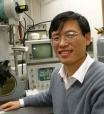
Principal Research Scientist, Nuclear Fuel Cycle
Role at ANSTO
Dire statistics for seabirds in latest plastics research
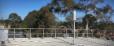
Radiation Monitoring
ANSTO continually monitors environmental gamma radiation from a station located in Engadine NSW. ANSTO uses environmental radiation data to evaluate atmospheric dispersion from its site. This radiation is almost completely natural background radiation.

OPAL 2024 Shutdown
ANSTO's OPAL reactor is one of the world's most advanced and reliable research reactors today. To ensure we can continue operating OPAL safely and reliably and maximise utilisation, ANSTO must regularly carry out maintenance and upgrades.

Research Scientist
Role at ANSTO
Ancient groundwater enters food web
Ancient groundwater in Australia contributing carbon to food webs through surface water.
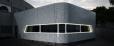
Advanced Diffraction & Scattering Beamlines (ADS-1 and ADS-2) UNDER CONSTRUCTION
The Advanced Diffraction and Scattering beamlines (ADS-1 and ADS-2) are two independently operating, experimentally flexible beamlines that will use high-energy X-ray diffraction and imaging to characterise the structures of new materials and minerals.
Environmental research at archaeological site
Insights about Mayan Empire relevant for current climate challenges

Industry
ANSTO is home to over AUD$1.3B state of the art instruments and science technology. To access ANSTO’s world-leading and highly specialised facilities and capabilities, please contact our Industry Engagement team. This way we can co-ordinate your enquiry and provide advice on your application.
Two ANSTO scientists made an Officer of the Order of Australia
2019 Shorebirds Competition Summary and Results
From June to August we invited primary schools in Greater Sydney/Illawarra and Melbourne to participate in our 2019 Shorebirds Competition. Students in Years 3 to 6 were asked to create a public awareness poster for a threatened shorebird found in Australia.
Investigating the impact of radiation and radioactive contamination on forensic trace evidence
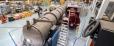
Industry Access - Lucas Heights
ANSTO’s Lucas Heights campus has an extensive range of specialised facilities and capabilities that are available to assist industry-based professionals in solving problems. Please contact us to discuss how we can assist you. We are open to entering into commercial arrangement with appropriate partners.