
2025 Think Science Competition Summary and Results
Think Science! 2025 Summary and results


Showing 101 - 120 of 230 results
Think Science! 2025 Summary and results

The Centre for Acclerator Science operates accelerators that can be used for space radiation testing.
ANSTO Head of Research Dr Suzanne Hollins has been appointed to chair IAEA group on nuclear applications.
The Multi-wavelength absorption black carbon instrument (MABI), a technology designed and built at ANSTO to measure black carbon in the atmosphere is now commercially available from Thomson Environmental Systems.
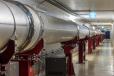
The Imaging and Medical beamline (IMBL) is a flagship beamline of the Australian Synchrotron built with considerable support from the NHMRC. It is one of only a few of its type, and delivers the world’s widest synchrotron x-ray ‘beam’.

Are you a school student who likes a creative challenge? Enter our new Incredible Insects Competition during the month of July 2021! You could win yourself a prize pack worth over $100! School students from all States/ Territories of Australia are invited to enter.
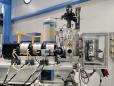
The high-energy heavy-ion microprobe is used for the characterisation or modification of material properties at depths from approximately 1 micrometre to maximum depths of up to 500 micrometres from the material surface.



Technical information for the Powder Diffraction beamline at the Australian Synchrotron.
Think Science! 2023 Summary and Results
ANSTO has hosted an event to launch a new Dharawal language learning resource for primary students at the nandin innovation centre.
Highlighting the contribution of four inspirational ANSTO leaders on International Women's Day.

Mr Andrew Carriline is an experienced senior business executive, commercially astute and highly skilled at operating successfully in regulated environments.
With a well-established portfolio of nuclear research and the operation of Australia's only nuclear reactor OPAL, ANSTO scientists conduct both fundamental and applied research on fuel for current, advanced, and future nuclear technology systems.
An international team led by ANSTO has been awarded a prestigious program grant from the Foundation for Australia-Japan Studies.
Two of Australia’s leading science organisations, ANSTO and the National Measurement Institute (NMI), which share areas of common interest in both measurement and research, signed a MOU formalising collaboration on 6 March 2019.

The project aims to engage the wider cultural heritage community in addition to our internal research.