New Australian led patient-care project in the Asia and Pacific region launched in partnership with the IAEA
The IAEA is providing $1.3m over four years to implement a new, Australian-led patient-care project for the Asia and Pacific region


Showing 101 - 120 of 142 results
The IAEA is providing $1.3m over four years to implement a new, Australian-led patient-care project for the Asia and Pacific region
Access to a ‘window into the cell’ with University of Wollongong cryogenic electron microscope at ANSTO.
The mining industry is set to benefit from a new Australian capability that uses a nuclear scanning technique to detect the presence of precious metals and strategic minerals in a core sample.

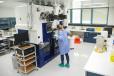
Research and development activity explores new, boutique radioisotopes, including positron, gamma and beta/gamma emitter. The aim is to provide material for the next generation of diagnostic and therapeutic radiopharmaceuticals
Blake Orr from ARPANSA review the Netflix series Radioactive Emergency.
NSW grants bolster additive manufacturing and groundwater processing capabilities.
ANSTO continues a longstanding, mutually-beneficial research relationship with the University of Wollongong following the signing of a strategic agreement this week.
ANSTO is a unique national science organisation that began operating under its predecessor The Australian Atomic Energy Commission (AAEC) 70 years ago.
Cracking the code for crop nutrition and food quality with X-ray fluorescence microscopy.
Your students can analyse real research data from ANSTO scientists.


Stewart started at ACNS in 2007 after completing his Bachelor’s degree where he completed his honours projects with ANSTO.
In 2023 we’re celebrating the 70th Anniversary since Australia began developing our nation’s Australia’s nuclear capabilities.
Powder diffraction and X-ray fluorescence microscopy support investigation of pigments in rock art.
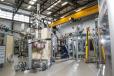
When an energetic ion beam hits a sample it will interact with the atoms through a number of very complex interactions. By detecting and measuring the reaction products resulting from the various interactions and their intensities, you can obtain quantitative data on the sample's constituent elements and their spatial distribution.