

Showing 1021 - 1040 of 2448 results
The world’s best radon detector just got smaller
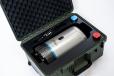
The need for a smaller, more transportable version of ANSTO’s 1500-litre atmospheric radon-222 monitor, and with a calibration traceable to the International System of Units, prompted the team to develop a 200-litre radon monitor that would meet those needs.
CORIS360® case studies
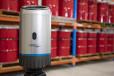
View these case studies for a more detailed look at industry challenges and how CORIS360® radiation imaging technology is improving operational decision making and keeping workers safe.
Crucial expertise in groundwater benefits Australia
Using nuclear techniques to help sustain Australia's finite groundwater resources
Man-made fossil emissions larger than previously believed
ANSTO contributes to major study on global warming by measuring methane and carbon monoxide trapped in ice.
Australian-first detector to accelerate cancer research
Multi-million dollar Australian Cancer Research Foundation (ACRF) Detector launched at the Australian Synchrotron,
Remediation project underway
CORIS360® case studies
From ice cores to cosmic events: plenary speakers announced
Four international authorities will deliver plenary addresses virtually at the 15th International Conference on Accelerator Mass Spectrometry (AMS15) , which will be held online from 15-19 November.

Shorebirds Competition 2021
ANSTO is proud to host the Shorebirds Competition for the fourth year. This unique environmental poster competition is free to enter and offers over $4000 in prizes (insert link to prizes button) for students and schools!

User Meeting 2026 - Awards
You are invited to submit to the various awards from ANSTO and the User Meeting 2026 organising committee.

Role at ANSTO
Accelerator Operator.
Powder Diffraction
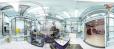
The Powder Diffraction beamline at the Australian Synchrotron is optimised for carrying out structural investigation under non ambient conditions and as a function of time.
Ultra-thin membrane developed for possible use in water filtration
Scientists from Monash, ANSTo and China have developed an ultra-thin membrane that could separate harmful ions from water or capture gases.
Frequently Asked Questions
Frequently asked questions about the ANSTO Security Process, travel funding, ANSTO Research Portal and ACNS Customer Portal.
Potential good news for a warming world
Collaboration finds that old carbon reservoirs are unlikely to cause a massive greenhouse gas release in a warming world.
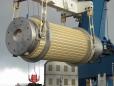
Nuclear Waste Solutions
Combining scientific expertise with more than $1.3 billion in unique operational assets to provide optimal radioactive waste solutions.