Excavation of dark matter lab completed
With all excavation completed and rock removed from the underground site, the physics lab will now be built within the caverns of the Stawell Mines site.


Showing 1101 - 1120 of 2201 results
With all excavation completed and rock removed from the underground site, the physics lab will now be built within the caverns of the Stawell Mines site.
In a world-first study, Australian environmental scientists have used cave stalagmites as a record of groundwater replenishment over time, that showed the current level of rainfall recharging groundwater in southwest WA is at its lowest for at least the last 800 years.
Phenomenon predicted by Nobel Prize recipient
Physicist and cancer research Dr Mitra Safavi-Naeini, Macromolecular crystallography beamline scientist Dr Eleanor Campbell and Engineering Support Workshop Manager Bianca Shepherd have been chosen by Science and Technology Australia as the next Superstars of STEM
Potential new treatments and tools for depression under development.
ANSTO’s Australian Synchrotron has been working on an initiative that could substantially improve radiotherapy treatment for cancer patients.
Nuclear science is crucial to understanding our universe, our world and ourselves at the atomic level. If we can understand how atoms get together, interact, or can be best combined with other atoms, new, more efficient materials and drugs can be developed.
ANSTO researchers have taken up the challenge to develop a coating for the cladding used in nuclear reactors to prevent it from taking up hydrogen and releasing it if temperatures get too high and repair itself if damaged.

Over the last decades, neutron, photon, and ion beams have been established as an innovative and attractive investigative approach to characterise cultural-heritage materials.
A specialist in particle therapy treatment planning from the Mayo Clinic in the US, Professor Chris Beltran, recently visited ANSTO for an exchange for information.
Oportunity to to gain expertise on neutron instruments
Australian and Taiwanese scientists have discovered a new molecule which puts the science community one step closer to solving one of the barriers to development of cleaner, greener hydrogen fuel-cells as a viable power source for cars.
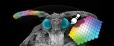
Incredible Insect Competition Winners of 2021. Digital colouring-in competition.
Radioisotopes are widely used in medicine, industry, and scientific research. New applications for radioisotopes are constantly being developed.