ANSTO's innovative approach to treating cancer gets funding
An international team led by ANSTO has been awarded a prestigious program grant from the Foundation for Australia-Japan Studies.


Showing 1121 - 1140 of 1181 results
An international team led by ANSTO has been awarded a prestigious program grant from the Foundation for Australia-Japan Studies.
Research makes it possible to assess if and how rocky coasts, which make up the majority of the world’s coasts including Australia and New Zealand, will respond to changes in marine conditions.

ANSTO's unique capabilities are being used to develop a quick analytical tool to determine the geographic origin of seafood and authenticates quality.
A large team of international researchers have used synchrotron techniques to understand how key proteins contribute to the virulence of the rabies virus, sometimes called the “zombie virus.”
Dr Inna Karatchevtseva, who collaborates with DMTC, was among those identified by The Australian in its Research magazine as a national leader in her field of ceramic engineering
ANSTO researchers investigate the behavior of materials in extreme environments, to analyse and predict how they will behave under adverse conditions.
In a paper published yesterday, Traditional Owners and researchers report on the oldest securely dated pottery discovered in Australia, located at Jiigurru (Lizard Island Group) on the Great Barrier Reef.
ANSTO completed an international overnight dash for nuclear medicine earlier this week, chartering three planes to get potentially life-saving children’s cancer treatments from Japan to hospitals across Australia.
Korean physicists concluding placement at ANSTO under a collaborative agreement.
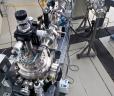
Particle induced gamma-ray emission (PIGE) is typically run in conjunction with PIXE and RBS and is used to quantify concentrations of elements such as lithium, fluorine, sodium, magnesium and aluminium.
Although Australia does not use nuclear energy for power needs, it does have the nuclear capabilities, knowledge, and expertise provided by ANSTO to ensure the national interest in nuclear matters is protected and advanced.
The newly built Medicines Manufacturing Innovation Centre (MMIC), co-located at the Australian Synchrotron at Clayton, was officially opened on Wednesday by the Victorian Deputy Premier and Minister for Medical Research the Hon Ben Carroll.
A delegation of Taiwanese officials and ANSTO staff celebrated the 10th anniversary of the operation of an advanced scientific instrument, a cold neutron triple axis spectrometer Sika on 4 September.

Nuclear-based energy generation systems not only provide comparatively low-cost, low-carbon emission electricity but also provide substantial amounts of process heat.

ANSTO's Sydney locations are home to the Open Pool Australian Light-water (OPAL) multi-purpose reactor, the Centre for Accelerator Science (CAS), the Australian Centre for Neutron Scattering, the National Research Cyclotron and the National Deuteration Facility.

The Infrared microspectroscopy microscopes can record spectra from a range of different samples; from thin microtomed sections to polished blocks and embedded particles. This section highlights the types of samples that can be analysed using the IRM beamline