Advancing particle therapy
Meeting of minds about potential next-generation cancer treatment for Australians


Showing 121 - 140 of 396 results
Meeting of minds about potential next-generation cancer treatment for Australians
In Australia and the Southeast Asia basin, the ANSTO facility offers a wide range of unique nuclear-beam techniques for cultural heritage research.
Australia’s new Mo-99 manufacturing facility reaches practical completion

ANSTO User Meeting 2021 - Speakers
Australia and Sri Lanks signs new partnership to fight chronic kidney disease.
ANSTO’s Innovation Precinct welcomes NSW Government’s $12.5 commitment funding.
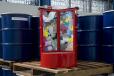
ANSTO has safely managed its radioactive waste for over 60 years. Waste is managed in accordance with national and international standards.
At ANSTO we have a large range of facilities that can be used to investigate planetary materials.
Emu instrument Scientist Gail Iles has left the Australian Centre for Neutron Scattering for RMIT.
ANSTO today welcomed a significant Federal Government funding allocation to further safeguard the production of life-saving nuclear medicines in Australia.
ANSTO is a partner on the National Space Qualification Network (NSQN) led by the Australian National University (ANU) that will transform Australia into a world-leading space centre by enhancing facilities to test payloads, components, and hardware prior to their use in harsh environments of space.
ANSTO, Australia’s knowledge centre for nuclear science and technology, connects STEM graduates with industry to work on real-world challenges through its FutureNow Scholarships for 2022.

ANSTO offers capabilities and expertise for the radiation testing and accreditation of space-based systems.
Discussions were held on possible areas on cooperation including research reactor operation and utilisation, environmental monitoring of mining tails, and food provenance.
Federal Parliament’s House Standing Committee on the Environment and Energy has presented its report, arising from its Inquiry into the prerequisites for nuclear energy in Australia today.
ANSTO's facilities in Sydney include access to neutron beam instruments, X-ray and infrared instruments, biological and chemical deuteration, accelerators, and an array of other capabilities and techniques.
A limited amount of travel support is available to students from AINSE member institutes to travel to the New User Sympsosium.