
Radiation training terms and conditions
On behalf of ANSTO thank you for your interest in our tours. We hope your visit to ANSTO will be both enjoyable and informative.


Showing 121 - 140 of 157 results
On behalf of ANSTO thank you for your interest in our tours. We hope your visit to ANSTO will be both enjoyable and informative.

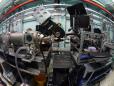
Technical information on the SAXS / WAXS beamline at the Australian Synchrotron.


The new facility will be built around a product line of ANSTO’s design – a new Technetium-99m generator – that will enable greater process automation than is possible with existing technology, leading to improvements in efficiency, quality and importantly the highest levels of production safety.
The protein mapping workhorses of the Australian Synchrotron, Macromolecular and Microfocus crystallography beamlines, MX1 and 2, continue to support important biomedical research in the development of vaccines and new therapeutics.
Research will change understanding of Australian Aboriginal rock art found in rock shelters of the Kimberley and its relationship to a changing landscape

This COVIDSafe Plan describes the actions that ANSTO will take to keep our staff, contractors and visitors and platform users and collaborators safe and minimise the risk of the spread of COVID-19 infection.



The BRIGHT Nanoprobe beamline provides a unique facility capable of spectroscopic and full-field imaging. NANO will undertake high-resolution elemental mapping and ptychographic coherent diffraction imaging. Elemental mapping and XANES studies (after DCM upgrade) will be possible at sub-100 nm resolution, with structural features able to be studied down to 15 nm using ptychography.

Four annual awards in neutron scattering were announced at Australian Neutron Beam Users Group (ANBUG) and AINSE Neutron Scattering Symposium (AANSS) to individuals with strong links to ANSTO

ANSTO User Meeting 2021 - Speakers

Shaun Jenkinson is currently Chief Executive Officer of ANSTO.
ANSTO is participating in a major project to learn more about an important component of the atmosphere, the hydroxyl radical.


ANSTO researchers are investigating nuclear propulsion systems for applications on the sea and in space.